Sunday our middle school youth group baked cookies and stuffed boxes for our college students' first care package. We've got it in our goals that eventually the college folks hear from us every month, and this year as a step toward that we needed to get these boxes out.
I'm all about giving kids hints about things to write, especially to people they don't know really well. When we did soldiers' Christmas cards last month, I started including examples of things to write on the screen. The tradition continued this time with a few example notes, funny ones that I intended to be a launchpad for these kids' imaginations.
"Dear ______," one began, "God loves you even if you get an F." This one I told them straight out was just there for fun, and they were good about not using it. But the next two were favorites, showing up on almost all the postcards.
"Dear ________, we hope you're having a great year. These cookies will make you smarter. Love, the youth group at CSMSG."
"Dear _______, these cookies are to help you get through your exams. They have all the answers on the bottom. Love, the youth group at CSMSG."
11.14.2006


11.13.2006
Good Read November 13th, 2006
Since I work in a parish with a school that shares our building, this story, in the Christian Science Monitor, caught my eye:
"In Britain, families to go church so kids can go to school"
One-third of the state-funded sector - 7,000 schools - are faith-based. Most are Christian (Roman Catholic or Church of England), many of which date back to the 18th and 19th centuries, when churches provided the only free basic education available to poor children.
When the schools are oversubscribed, admission is often governed by regular church attendance and energetic parish involvement. Some schools even require parents to get a document from the local priest attesting to their attendance and commitment. For parents like Allen, a bit of time helping at the Christmas bazaar or hosting a coffee is infinitely preferable to consigning her daughter to a bad school.
"It's been a really great way of getting into the community and getting to know people," she says. "You'll find very few people who get their kids into the school and then disappear."
Apparently folks who don't go to church aren't all that happy about it, saying that the church schools' real mission is to convert people and grow church memberships, but on the bottom line this is very much Jesus-style evangelism-- a way to meet a real human need (good education) and expose each person to faith at the same time.
"In Britain, families to go church so kids can go to school"
One-third of the state-funded sector - 7,000 schools - are faith-based. Most are Christian (Roman Catholic or Church of England), many of which date back to the 18th and 19th centuries, when churches provided the only free basic education available to poor children.
When the schools are oversubscribed, admission is often governed by regular church attendance and energetic parish involvement. Some schools even require parents to get a document from the local priest attesting to their attendance and commitment. For parents like Allen, a bit of time helping at the Christmas bazaar or hosting a coffee is infinitely preferable to consigning her daughter to a bad school.
"It's been a really great way of getting into the community and getting to know people," she says. "You'll find very few people who get their kids into the school and then disappear."
Apparently folks who don't go to church aren't all that happy about it, saying that the church schools' real mission is to convert people and grow church memberships, but on the bottom line this is very much Jesus-style evangelism-- a way to meet a real human need (good education) and expose each person to faith at the same time.
They don't always say what you want them to...
The middle school students were just starting to flow into the gym yesterday for our second round of their youth group when I saw one of them on the phone. Her dad had dropped her off five minutes before and I was mingling around and saying hi to everyone while a few of my favorite YouTube videos were going on the screen. Since I'd never seen anyone else's phone work in our gym, I took a step over to ask how good the service was, and overheard this:
"There are weird people here, will you come and get me?"
"There are weird people here, will you come and get me?"
11.07.2006
Because it matters when you do
In a previous parish, one of my students was trying to convince me to give blood, when her high school was sponsoring a blood drive.
"They don't need my blood," I said. "It's only one pint anyway."
"Do you vote?" Alexis asked.
"Of course."
"Why? It's just one vote." She had me.
In honor of election day, when we proudly celebrate (with stickers, even) how we can each be part of the political process, I offer this list of other things we should all do, because it matters if one person does.
Pray. Jesus promised God is listening, even to one prayer at a time.
Tithe. Preventing your stewardship chair from worrying is a ministry all its own.
Give blood. Yes, they need a lot. But you can always make more.
Recycle. It's easy. No excuses.
Vote. Or quit complaining.
Volunteer with the youth group. Shameless plug there.
Write a letter to the editor. Someone will read it. Something will change.
Ask "How are you?" and make time for the whole story.
Start an honest conversation with someone from another faith.
Open your eyes in the morning and say "Thank you, God." Do it first, before you get distracted.
"They don't need my blood," I said. "It's only one pint anyway."
"Do you vote?" Alexis asked.
"Of course."
"Why? It's just one vote." She had me.
In honor of election day, when we proudly celebrate (with stickers, even) how we can each be part of the political process, I offer this list of other things we should all do, because it matters if one person does.
Pray. Jesus promised God is listening, even to one prayer at a time.
Tithe. Preventing your stewardship chair from worrying is a ministry all its own.
Give blood. Yes, they need a lot. But you can always make more.
Recycle. It's easy. No excuses.
Vote. Or quit complaining.
Volunteer with the youth group. Shameless plug there.
Write a letter to the editor. Someone will read it. Something will change.
Ask "How are you?" and make time for the whole story.
Start an honest conversation with someone from another faith.
Open your eyes in the morning and say "Thank you, God." Do it first, before you get distracted.
Not even sure what to say about this...

Today, I was working on the DVD of CSMSG's parenting seminar from this past week, and needed new DVD discs, so went over and bought some. This is a photo of the box.
Notice the claim the company makes for this particular line of discs. They have "100% shatterproof cases." The speed of the disc isn't important anymore, or the quality of the material, just the shatter-proof-ness of the case.
The case is made of paper. Light cardboard, actually. So of course it won't shatter; cardboard doesn't do that.
I think this is on the same level as a church that evangelized by sending letters to all the neighbors saying "You are pre-approved for Heaven!" True, yet still somehow misleading.
11.03.2006
A Quote
I had a conversation about everything with one of my students last night, and toward the end of it he said the following:
"I know God's perfect and all, but I think He could have done a better job about some things!"
I was so proud of him. Proud of his candor and the weight on his heart that led him to think about how the world might be made a better place.
"I know God's perfect and all, but I think He could have done a better job about some things!"
I was so proud of him. Proud of his candor and the weight on his heart that led him to think about how the world might be made a better place.
11.02.2006
What did this mom do right?
CSMSG hosted a parenting seminar last night with Mark DeVries of Youth Ministry Architects. The topic was "Stacking the Stands for our Kids." Essentially, surrounding students with adults who care about them so that even when parents aren't seeming to have any traction in a kid's life, that kid can't go far without running into another adult who has his eternal future in mind.
One of the points that came out of a discussion on the movie "The Horse Whisperer" was that when moms are in trouble, they call Robert Redford.
Actually, that was a joke Mark made while talking about the movie. The point was in a story one mom told. "This student I teach," she began, telling us about a 12-year-old boy, "never really let on what he was feeling until one day we were working outside. Then, as we worked, he started to talk about all these things that were going on in his life, and I thought, 'I never knew he felt all that.'"
"When we got in the car to go home," she went on, "I realized I was going to have to learn to shoot baskets."
This mom did two things right, and they're important ones. She let a conversation happen where the student was comfortable, for one. She realized that her adult way of working out problems (talking about them, when talking about them was the whole activity) wasn't going to reach this student, who needs some third object to focus on in order to open up the deeper side of his brain. And she decided to adapt herself so she could meet the need in his life for someone who would listen, not insist that the child adapt to her style or talk to her next time on her terms.
Parents, when you hear someone say something like this and it's new to you, give it a try. It works. Not always right away, but play some ball and squish some bugs and you're practically in. Youth ministers, find out where this lady lives and go recruit her for your congregation, because she's figured out what it takes to get kids to open up, and put it into practice in her own life.
One of the points that came out of a discussion on the movie "The Horse Whisperer" was that when moms are in trouble, they call Robert Redford.
Actually, that was a joke Mark made while talking about the movie. The point was in a story one mom told. "This student I teach," she began, telling us about a 12-year-old boy, "never really let on what he was feeling until one day we were working outside. Then, as we worked, he started to talk about all these things that were going on in his life, and I thought, 'I never knew he felt all that.'"
"When we got in the car to go home," she went on, "I realized I was going to have to learn to shoot baskets."
This mom did two things right, and they're important ones. She let a conversation happen where the student was comfortable, for one. She realized that her adult way of working out problems (talking about them, when talking about them was the whole activity) wasn't going to reach this student, who needs some third object to focus on in order to open up the deeper side of his brain. And she decided to adapt herself so she could meet the need in his life for someone who would listen, not insist that the child adapt to her style or talk to her next time on her terms.
Parents, when you hear someone say something like this and it's new to you, give it a try. It works. Not always right away, but play some ball and squish some bugs and you're practically in. Youth ministers, find out where this lady lives and go recruit her for your congregation, because she's figured out what it takes to get kids to open up, and put it into practice in her own life.
10.31.2006
Cross-Pollinating training
I ran across this article this morning, on airline pilots helping to train medical professionals.
"...some doctors balk at the rote quality of the procedures, claiming that they are unnecessary and undermine their authority.
“I had one surgeon tell me that checklists are for the lame and weak,” said Professor Helmreich of the University of Texas.
Even the most recalcitrant tend to come around, however, when a safety check catches one of their mistakes, possibly saving a patient and preventing a malpractice suit."
What field could youth ministers cross-pollinate with to improve our training, or offer improved training to another field?
"...some doctors balk at the rote quality of the procedures, claiming that they are unnecessary and undermine their authority.
“I had one surgeon tell me that checklists are for the lame and weak,” said Professor Helmreich of the University of Texas.
Even the most recalcitrant tend to come around, however, when a safety check catches one of their mistakes, possibly saving a patient and preventing a malpractice suit."
What field could youth ministers cross-pollinate with to improve our training, or offer improved training to another field?
10.30.2006
Prayers, please.
"When the Devil comes to me in my bed and reminds me of my sins, I say to him, 'Yes, I know, but now I am trying to sleep, so go away." --Martin Luther
The first time you hear the little voice in your head saying "Isaac, your life is a lie," you can say back, "Don't start with me." The second and third time, when it also says "Why would they [my students] believe you anyway," and comes with a bunch of small, annoying misfortunes (forgetting supplies, getting lost, being late, losing volunteers at the last second,) it's easier to hear, and more tempting to listen to.
Jeanne Mayo has a great article in the "Youth Ministry Basics" column in the brand-new issue of Group, dealing with common distortions that get in the way of ministry, and the first thing she reminds us all is that we're not alone, that we all hear the same accusations. That must mean we can help each other.
Please pray for me, and I'll do the same for all of you.
The first time you hear the little voice in your head saying "Isaac, your life is a lie," you can say back, "Don't start with me." The second and third time, when it also says "Why would they [my students] believe you anyway," and comes with a bunch of small, annoying misfortunes (forgetting supplies, getting lost, being late, losing volunteers at the last second,) it's easier to hear, and more tempting to listen to.
Jeanne Mayo has a great article in the "Youth Ministry Basics" column in the brand-new issue of Group, dealing with common distortions that get in the way of ministry, and the first thing she reminds us all is that we're not alone, that we all hear the same accusations. That must mean we can help each other.
Please pray for me, and I'll do the same for all of you.
10.28.2006
Sunday Poll on Saturday
My answering machine says I have back-to-back soccer games this morning, and it's true... on the calendar, anyway. Neither game happened, although I went to both fields, starting when the sun was barely up! (Okay, that's a little exaggeration. I sat in the car and listened to Car Talk, which I never get to hear live, and that redeemed the time, although seeing the kids play would have made the morning.) I guess the fields were squashy because we've spent a week under rain, and while I think mud would make soccer more fun, I'm not in charge (and freezing cold mud might be less than pleasant.)
So instead of watching soccer games, I read a couple of stories about soccer games, and both are worth a look:
This article is about the "Silent Saturday" trend, where parents are not allowed to coach or cheer from the sidelines, in the interest of keeping games non-violent.
"In Naples, Fla., a straight shot across the Everglades from Weston, parents were told they'd draw fines every time they opened their mouths.
"We got parents coming up to us, saying, `Here's $35, $45. I know I'm going to say something,' "
And this is a commentary piece on the Snack Parent. While I think it should have been funnier, it's not really intended as a Dave Barry-type treatment, but a serious call to action.
"Are none of us reading about the obesity of our young people? Do you think it helps their well-being that after every sporting event our children gorge themselves Fall-of-Roman-Empire style on extra calories, extra sugar, extra hydrogenated fat? I recently sat down with Annette O’Neill, a registered dietitian and bona fide nutritionist, and asked her, “Do you think it’s a good idea for our kids to have Cheetos and Kool-Aid after a sporting event?” Her response: “Uh, no.”
That story brings me to my poll question. In the past two weeks, we here at CSMSG have had no fewer than four events that served pizza. We always end up with too much of it, and the youth minister doesn't always want his fridge stuffed with day-old Dominos. Is anyone using healthier food than pizza in youth ministry events? How does it work? Do you cook? Do parents? Do the youth? Do you not feed people at all?
So instead of watching soccer games, I read a couple of stories about soccer games, and both are worth a look:
This article is about the "Silent Saturday" trend, where parents are not allowed to coach or cheer from the sidelines, in the interest of keeping games non-violent.
"In Naples, Fla., a straight shot across the Everglades from Weston, parents were told they'd draw fines every time they opened their mouths.
"We got parents coming up to us, saying, `Here's $35, $45. I know I'm going to say something,' "
And this is a commentary piece on the Snack Parent. While I think it should have been funnier, it's not really intended as a Dave Barry-type treatment, but a serious call to action.
"Are none of us reading about the obesity of our young people? Do you think it helps their well-being that after every sporting event our children gorge themselves Fall-of-Roman-Empire style on extra calories, extra sugar, extra hydrogenated fat? I recently sat down with Annette O’Neill, a registered dietitian and bona fide nutritionist, and asked her, “Do you think it’s a good idea for our kids to have Cheetos and Kool-Aid after a sporting event?” Her response: “Uh, no.”
That story brings me to my poll question. In the past two weeks, we here at CSMSG have had no fewer than four events that served pizza. We always end up with too much of it, and the youth minister doesn't always want his fridge stuffed with day-old Dominos. Is anyone using healthier food than pizza in youth ministry events? How does it work? Do you cook? Do parents? Do the youth? Do you not feed people at all?
10.27.2006
How'd you find me?
I've been doing some work on Myspace, since all of CSMSG's students are there, practically, and Brian Schulenberg was completely right; you can be amazed by poking through the friends lists of your students! I put up a quick profile and started digging for students to see what they're up to and give me another angle to let them know what's going on and that they are being prayed for.
The most common response I'm getting back is "How did you find me on here?" Apparently they assume I'm old. Now, the truth is that they're all connected on each other's profiles, so all I had to do was get friended by the first three, and then the doors opened up for me to get in and find folks.
At the same time, the question is good and bad. Bad because it shows me that these kids still do think they're unfindable on Myspace, which is the biggest danger, but good because it lets me keep up the image that I know everything. Which is a tradition passed to me by my youth minister, who was quite proud of it.
The most common response I'm getting back is "How did you find me on here?" Apparently they assume I'm old. Now, the truth is that they're all connected on each other's profiles, so all I had to do was get friended by the first three, and then the doors opened up for me to get in and find folks.
At the same time, the question is good and bad. Bad because it shows me that these kids still do think they're unfindable on Myspace, which is the biggest danger, but good because it lets me keep up the image that I know everything. Which is a tradition passed to me by my youth minister, who was quite proud of it.
10.25.2006
Kansas City Star Article
A tip of the hat to Out of Ur for finding this story in the Kansas City Star. "Church's Challenge: Curb that Criticism"
Here's the point:
"Thou shalt not whine.
This past summer the Rev. Will Bowen challenged his Christ Church Unity congregation to go 21 days straight without complaining. Then he added sarcasm and gossip to the shalt nots.
To help everyone remember, he gave each a purple elastic wristband.
The rules were simple: If you complain, you have to switch the band to the other wrist and start over. This was on an honor system."
The whole story is worth the read. The pastor says there's a process you can go through to become complaint-free, and the first step is becoming aware that you complain.
Okay. So far this morning I've complained about traffic (everyone for some reason wanted to get to work this morning and I was near the end of the pack on Kingshighway); about my flu shot (it's useful, but not fun, even with a baseball bandaid and a rootbeer flavored sucker) and, going back a little farther, about having to get up.
Maybe I'll call for one of those purple bands.
Here's the point:
"Thou shalt not whine.
This past summer the Rev. Will Bowen challenged his Christ Church Unity congregation to go 21 days straight without complaining. Then he added sarcasm and gossip to the shalt nots.
To help everyone remember, he gave each a purple elastic wristband.
The rules were simple: If you complain, you have to switch the band to the other wrist and start over. This was on an honor system."
The whole story is worth the read. The pastor says there's a process you can go through to become complaint-free, and the first step is becoming aware that you complain.
Okay. So far this morning I've complained about traffic (everyone for some reason wanted to get to work this morning and I was near the end of the pack on Kingshighway); about my flu shot (it's useful, but not fun, even with a baseball bandaid and a rootbeer flavored sucker) and, going back a little farther, about having to get up.
Maybe I'll call for one of those purple bands.
10.22.2006
While it's fresh in my mind
Just came home from our first middle school youth group night, and realized that I had actually said, on tape and out loud, to a student, the following: "I get to send you home in 20 minutes. Have as many cupcakes as you want!"
That's just about as good as what another student said to me yesterday: I was advising time to listen to God, and was interrupted with, "That's how you act about your future wife, Isaac. You need to go out there and find women!"
I will be doing the "I love my job" dance for months on those two comments alone...
That's just about as good as what another student said to me yesterday: I was advising time to listen to God, and was interrupted with, "That's how you act about your future wife, Isaac. You need to go out there and find women!"
I will be doing the "I love my job" dance for months on those two comments alone...
10.20.2006
A lost post...
Scroll down about three entries for a lost post from earlier this week, that stayed in the drafts file rather than making it out to you, the reader!
The World Series makes me happy!
It's the Tigers and the Cardinals, baby!
Detroit and St. Louis start game 1 of the Series tonight, and I can't lose, since they're both sort of my teams!
It's not entirely fair to pray over a baseball game, but I'll be hard at work, trying to give the Cardinals a little divine advantage...
Detroit and St. Louis start game 1 of the Series tonight, and I can't lose, since they're both sort of my teams!
It's not entirely fair to pray over a baseball game, but I'll be hard at work, trying to give the Cardinals a little divine advantage...
10.18.2006
10.17.2006
Why a non-trip isn't enough
Last year in Nashville, during a missions-focused lunch with Jim Hancock and Rich van Pelt, I heard this idea for the first time.
"People who work or live in places where we lead mission trips would rather have the money we spend on the trip directly than the week of work by students we can bring them."
Since all of us are becoming more aware of the stewardship required of us, in money, time, natural resources, etc. this idea is getting more and more play. The numbers are pretty large; in another parish I served, the mission trip took $11,000 in fundraising to pull off. Reading through any of the alternative-gift catalogs (places like World Vision and Heifer Int'l, for example) you can see that $11k is enough to make a pretty sizable difference in someone's life, sometimes even beating back poverty and illness for an entire village.
So the idea of gathering money and sending it in lieu of workers has a lot of merit. But like all ideas that live at the poles of a discussion, it's not good enough.
Neither, of course, is short-term missions, by itself. We're finding that out every year as some kids have their lives transformed, and others look the whole week through the lens of the water park trip at the end, or the chance to be in a strange new place and explore it a little. One week of missions, while intended as a life-changer, more often affects the week before and after the trip, and then tails off again.
Youth need to take these trips so they can see what life is like for people who need our service, and get the fire in the belly to do something about the conditions we're called by God to address. And people in the areas we serve need continuing support (either directly or through missions groups that work there year-round) to make sure the effect on their lives lasts more than a week too.
We'll accomplish much more with a lifestyle of missions than with a trip a year. Part of our preparation should be raising money to help the people we're going to serve. The work itself is another important part. And the third, ongoing part, is working with students, one-on-one or in small groups, to decide what they'll do about what they've seen. The result of this lifestyle will be better conditions for people who need them today, and a generation of students who see their entire lives as mission trips tomorrow.
"People who work or live in places where we lead mission trips would rather have the money we spend on the trip directly than the week of work by students we can bring them."
Since all of us are becoming more aware of the stewardship required of us, in money, time, natural resources, etc. this idea is getting more and more play. The numbers are pretty large; in another parish I served, the mission trip took $11,000 in fundraising to pull off. Reading through any of the alternative-gift catalogs (places like World Vision and Heifer Int'l, for example) you can see that $11k is enough to make a pretty sizable difference in someone's life, sometimes even beating back poverty and illness for an entire village.
So the idea of gathering money and sending it in lieu of workers has a lot of merit. But like all ideas that live at the poles of a discussion, it's not good enough.
Neither, of course, is short-term missions, by itself. We're finding that out every year as some kids have their lives transformed, and others look the whole week through the lens of the water park trip at the end, or the chance to be in a strange new place and explore it a little. One week of missions, while intended as a life-changer, more often affects the week before and after the trip, and then tails off again.
Youth need to take these trips so they can see what life is like for people who need our service, and get the fire in the belly to do something about the conditions we're called by God to address. And people in the areas we serve need continuing support (either directly or through missions groups that work there year-round) to make sure the effect on their lives lasts more than a week too.
We'll accomplish much more with a lifestyle of missions than with a trip a year. Part of our preparation should be raising money to help the people we're going to serve. The work itself is another important part. And the third, ongoing part, is working with students, one-on-one or in small groups, to decide what they'll do about what they've seen. The result of this lifestyle will be better conditions for people who need them today, and a generation of students who see their entire lives as mission trips tomorrow.
A step in the right direction
According to this story in the New York Times today, parents, both married and single, are spending more time with their children.
WASHINGTON, Oct. 16 — Despite the surge of women into the work force, mothers are spending at least as much time with their children today as they did 40 years ago, and the amount of child care and housework performed by fathers has sharply increased, researchers say in a new study, based on analysis of thousands of personal diaries.
This is the kind of study we need to see more of-- I can imagine the researchers sneaking into windows and digging under pillows to find diaries to analyze. It's a step in the right direction for sure-- now that parents have been caught paying attention to their kids, let's slip some devotion books into those diaries too!
WASHINGTON, Oct. 16 — Despite the surge of women into the work force, mothers are spending at least as much time with their children today as they did 40 years ago, and the amount of child care and housework performed by fathers has sharply increased, researchers say in a new study, based on analysis of thousands of personal diaries.
This is the kind of study we need to see more of-- I can imagine the researchers sneaking into windows and digging under pillows to find diaries to analyze. It's a step in the right direction for sure-- now that parents have been caught paying attention to their kids, let's slip some devotion books into those diaries too!
10.16.2006
Writing to the need
Up in Michigan, I worked with a pastor whose congregation included a retired Bishop. In a preaching class, Pr. Jon told us that the most common preaching question people asked him was "Don't you get nervous with the Bishop in your congregation?" He always answered "No," because the Bishop had himself spent years preaching and knew the pressure pastors were under to come up with a sermon every week. What made him nervous, he said, was seeing a new person in the back row on Sunday morning. "What brought that person here this morning, and will this sermon speak to that need?"
Last night we held our first high school youth gathering, called DropZone. Going along with our JUMP theme for the year, we decided to name the group DropZone because after leaping out of the airplane, or into a commitment of faith, the next important thing you need is a safe place to land. So our youth group's name is "DropZone-- a safe place to land." I'd decided not to go easy on anyone with the first meeting, or have much fluff in it at all-- I wanted the idea of our mission as Christians to come out strong, so our project was learning about hunger and poverty and how we could help to solve them, and I spoke on the Great Commission.
The two phrases I think are really important from that passage (Matthew 28:16-20) are "but some doubted" (vs. 17b) and "And I will be with you always." (vs. 20b) The first phrase doesn't leave anyone out of the mission; it says that perfect faith isn't required to follow Jesus, just a pair of good shoes and the willingness to do what Jesus does. The second phrase reminds us that we're not alone, that there's nothing to be afraid of, and no excuse for not going along. The whole passage is like a classified ad for a job with Jesus, and the headline says "No experience necessary-- on the job training will be provided!"
I had a conversation with a student last week about doubts. And when I came across the "but some doubted" note in Matthew's Gospel, I felt the Spirit move through it and grabbed on. It was something I'd never considered important before that reading, but I couldn't get away from that insight. And that same student came up to me afterward and said "That's exactly what I'm struggling with. Did you do that on purpose?"
When we hear about a need in our ministries, we need to speak to that need. It's not just one student who's having it; that one was just brave enough to bring it up.
Last night we held our first high school youth gathering, called DropZone. Going along with our JUMP theme for the year, we decided to name the group DropZone because after leaping out of the airplane, or into a commitment of faith, the next important thing you need is a safe place to land. So our youth group's name is "DropZone-- a safe place to land." I'd decided not to go easy on anyone with the first meeting, or have much fluff in it at all-- I wanted the idea of our mission as Christians to come out strong, so our project was learning about hunger and poverty and how we could help to solve them, and I spoke on the Great Commission.
The two phrases I think are really important from that passage (Matthew 28:16-20) are "but some doubted" (vs. 17b) and "And I will be with you always." (vs. 20b) The first phrase doesn't leave anyone out of the mission; it says that perfect faith isn't required to follow Jesus, just a pair of good shoes and the willingness to do what Jesus does. The second phrase reminds us that we're not alone, that there's nothing to be afraid of, and no excuse for not going along. The whole passage is like a classified ad for a job with Jesus, and the headline says "No experience necessary-- on the job training will be provided!"
I had a conversation with a student last week about doubts. And when I came across the "but some doubted" note in Matthew's Gospel, I felt the Spirit move through it and grabbed on. It was something I'd never considered important before that reading, but I couldn't get away from that insight. And that same student came up to me afterward and said "That's exactly what I'm struggling with. Did you do that on purpose?"
When we hear about a need in our ministries, we need to speak to that need. It's not just one student who's having it; that one was just brave enough to bring it up.
10.10.2006
Birth of a ministry (that leaves my thumbs sore)
I started text-messaging a bunch of my students today, first thing as I got into work and put away all the stuff from the Austin conference. Just a quick note letting them know I was praying for them and that they should have a great day. And what do you know? One of them texted back to share some heavy thoughts. Which led to a real phone call and will lead to a lot of prayer and a face-to-face in short order. The message only took me a second to send, but I was blown away by how fast it started to work. This meeting youth on their turf thing has some promise, (the youth minister realizes way later than everyone else!)
Brian Shulenberg had a lot to say about that in his seminar "Why Myspace, Xanga, Facebook, and Blogs are Changing all the Rules in High School Ministry." It's not that becoming savvy with technology and interactive whatnot will give me an open door into every one of my students, but it'll crack the window with one or two more.
The main thing youthworkers need to be, this seems to say, is flexible. We can't afford to pass any new medium by without giving it a look, (although with the amount of work that takes, we'll also probably be praying for a lot of new Betamax-type things that don't go anywhere.)
In the meantime, all the students I have cell phone numbers for are now in my little Nokia, and I have a new way to pass the time at red lights-- sending out these little electronic pats on the back to help them through!
Brian Shulenberg had a lot to say about that in his seminar "Why Myspace, Xanga, Facebook, and Blogs are Changing all the Rules in High School Ministry." It's not that becoming savvy with technology and interactive whatnot will give me an open door into every one of my students, but it'll crack the window with one or two more.
The main thing youthworkers need to be, this seems to say, is flexible. We can't afford to pass any new medium by without giving it a look, (although with the amount of work that takes, we'll also probably be praying for a lot of new Betamax-type things that don't go anywhere.)
In the meantime, all the students I have cell phone numbers for are now in my little Nokia, and I have a new way to pass the time at red lights-- sending out these little electronic pats on the back to help them through!
10.09.2006
On your way out...
...get some barbecue!
Even in the airport, I have to find good food, so just now my dear friend and colleague Marty C and I stopped at the Salt Lick BBQ in the Austin airport for brisket and beer. This place does a fantastic job; the brisket and turkey were both tender, smoky and juicy. The house sauce is thin and tangy and they serve coleslaw, beans and potato salad, and soft bread to go along with the main course. The beans were just a little sub-par, but since I'll be in a small metal tube with other people who need to breathe for the next few hours, that's not a bad thing.
So stop by the Salt Lick stand on your way out of town, for one last taste of Austin!
Even in the airport, I have to find good food, so just now my dear friend and colleague Marty C and I stopped at the Salt Lick BBQ in the Austin airport for brisket and beer. This place does a fantastic job; the brisket and turkey were both tender, smoky and juicy. The house sauce is thin and tangy and they serve coleslaw, beans and potato salad, and soft bread to go along with the main course. The beans were just a little sub-par, but since I'll be in a small metal tube with other people who need to breathe for the next few hours, that's not a bad thing.
So stop by the Salt Lick stand on your way out of town, for one last taste of Austin!
NYWC Austin: Last Morning
Like most disciples, I'm not ready to go home. I'd love to build a booth on this mountaintop, out of leftovers from the exhibit hall, and live here basking in Jesus' glow from the convention forever. The only problem I can see with this is that my grocery budget would be obscene.
Am I ready go to home? No. Do I have to? Yes. So what will I do when I get there?
I will believe that God has the power to do even the most miraculous things I can think of, and even more since I can't, without the Spirit's help, even think of most of them.
I will remember that youth ministry is way bigger than me by myself, and I will ask for help.
I will take time to sit and listen, to God and to my peers and students.
I will teach my students to use the Word, to know it, and to interact with it, and they'll all carry highlighters for the good stuff.
I will stop praying like a wuss.
I hope.
I could sure use some help with these pledges. Would you all pray for me? I'll do the same for you. God's got a great plan for us this year-- let's hold each other accountable for taking part in it as it's revealed.
Father, I pray for your whole church, and for my friends who minister with students. Pour your power on this world and refresh us. Help us remember your prophets, your teachers, and your Son, who have all felt what we feel and worked where we work. Let us see enough of your plan that we can know what you would have us do, but not so much that we rely on our own work to accomplish it. Be with our students and grow them into the strong disciples you've planned them to be. Be with our families, our spouses (and future spouses, please) and all who care for us and keep us healthy. Help us to lavish time and love on them so they know how much we appreciate them. Your Kingdom come in all its perfection, and let us see it. Amen.
Am I ready go to home? No. Do I have to? Yes. So what will I do when I get there?
I will believe that God has the power to do even the most miraculous things I can think of, and even more since I can't, without the Spirit's help, even think of most of them.
I will remember that youth ministry is way bigger than me by myself, and I will ask for help.
I will take time to sit and listen, to God and to my peers and students.
I will teach my students to use the Word, to know it, and to interact with it, and they'll all carry highlighters for the good stuff.
I will stop praying like a wuss.
I hope.
I could sure use some help with these pledges. Would you all pray for me? I'll do the same for you. God's got a great plan for us this year-- let's hold each other accountable for taking part in it as it's revealed.
Father, I pray for your whole church, and for my friends who minister with students. Pour your power on this world and refresh us. Help us remember your prophets, your teachers, and your Son, who have all felt what we feel and worked where we work. Let us see enough of your plan that we can know what you would have us do, but not so much that we rely on our own work to accomplish it. Be with our students and grow them into the strong disciples you've planned them to be. Be with our families, our spouses (and future spouses, please) and all who care for us and keep us healthy. Help us to lavish time and love on them so they know how much we appreciate them. Your Kingdom come in all its perfection, and let us see it. Amen.
10.08.2006
Make sure you eat!
I keep running into people who are skipping meals, so I have a couple more suggestions. Both of these have been recommended by fellow youth workers and tried by the Rookie.
Breakfast and lunch both today came from Java Jive on Fifth, the coffee shop at the corner of the Hilton Austin Hotel. That's sort of a gimme for food, but both the cheese Danish and chicken Caesar were tolerable, there was jazz playing and I got to eat outside and read a book and people-watch. For the map-aholics among us (points at self) it's 500 E. 4th St., 78701
For dinner, about six of us made our way to the Mongolian Grille, at 2nd and Jacinto. In fact, from the south doors of the convention center, you can nearly see the building, directly across the street from P.F. Chang's. I was nervous about dinner because the last time I went to one of these places, I managed to mess up my own dinner pretty badly. See, Mongolian BBQ means, for the uninitiated, you pick your own ingredients and sauces and they cook it in front of you live. Which is cool, but I don't know anything about sauces for Chinese food. The neat thing about the Mongolian Grille here in Austin is that they have a whole set of recipes for sauces you can make that work, and I followed one. So it was great. Mongolian Grille is at 117 San Jacinto Blvd., 78701
If anyone's in need of lunch tomorrow, or sticking around, check them out!
Breakfast and lunch both today came from Java Jive on Fifth, the coffee shop at the corner of the Hilton Austin Hotel. That's sort of a gimme for food, but both the cheese Danish and chicken Caesar were tolerable, there was jazz playing and I got to eat outside and read a book and people-watch. For the map-aholics among us (points at self) it's 500 E. 4th St., 78701
For dinner, about six of us made our way to the Mongolian Grille, at 2nd and Jacinto. In fact, from the south doors of the convention center, you can nearly see the building, directly across the street from P.F. Chang's. I was nervous about dinner because the last time I went to one of these places, I managed to mess up my own dinner pretty badly. See, Mongolian BBQ means, for the uninitiated, you pick your own ingredients and sauces and they cook it in front of you live. Which is cool, but I don't know anything about sauces for Chinese food. The neat thing about the Mongolian Grille here in Austin is that they have a whole set of recipes for sauces you can make that work, and I followed one. So it was great. Mongolian Grille is at 117 San Jacinto Blvd., 78701
If anyone's in need of lunch tomorrow, or sticking around, check them out!
Habits of the Just
There was an episode of something years ago where one of the characters wanted to get a handicapped parking sticker for his car, so he could park close to stores during the holiday shopping season. To make sure he'd get the pass, he described himself as having nearly every disease and disability there was. And he got busted when the city parking inspector wanted to meet him in person, because he'd never heard of anyone who was that sick.
Malcolm Gladwell, in his excellent book "The Tipping Point" notes that crime rates in New York City went down sharply after the mayor decided to have the police department crack down on turnstile-jumpers and grafitti artists on the city's subway. Beginning with incredibly small things caused huge changes. The little things gave hope to the law-abiding, who became more active in keeping things hopeful, and shamed the lawbreakers.
We've just heard from Sharon Kohn, who's in charge of operations for International Justice Mission. We've been confronted with a huge reality (for example, the 27 million people in slavery today, more than any other time in history) and Christ's command to us to get out into God's world and work with Him to help heal it.
I'm both inspired and terrified at what God asks of us in seeking justice. I proudly and happily buy fairly traded coffee-- that's easy. The church where I work supports shelters and food pantries and donates supplies to help the poor in St. Louis-- we can do that without going any farther than our building. But I've never rescued anyone from slavery, or gone to the Third World to rescue children forced into prostitution. It's been years since I even wrote a letter to the editor. And I'm scared, honestly, of a lot of those things and what changes they would mean in my life.
As usual, there's more to justice than I'm ready to take on by myself.
But justice is a system that starts, a la Malcolm Gladwell, with the smallest things. We can think about justice once a year when a speaker shows us faces and tells us tragic (but ultimately victorious) stories, or we can keep justice in our minds all the time in the way we handle the details.
I'm telling myself that it's petty and won't matter, but justice begins at the handicapped parking space. In other words, it begins by making sure that people with needs have access to the things that meet them. Justice is not forgetting about elderly people who live in nursing homes with little contact from their own families. It's making sure soup kitchens and shelters have the food and manpower they need to serve their clients. It's losing our fear of people with mental illnesses and caring for them. It's challenging our middle school students to love their nerdy classmate (aka neighbor.)
What justice needs to grow is a tipping point, when so many of us are doing so many little things that we can't avoid the hope they give us, and start living, as Sharon Kohn put it, like we believe we are God's plan for justice in the world.
Malcolm Gladwell, in his excellent book "The Tipping Point" notes that crime rates in New York City went down sharply after the mayor decided to have the police department crack down on turnstile-jumpers and grafitti artists on the city's subway. Beginning with incredibly small things caused huge changes. The little things gave hope to the law-abiding, who became more active in keeping things hopeful, and shamed the lawbreakers.
We've just heard from Sharon Kohn, who's in charge of operations for International Justice Mission. We've been confronted with a huge reality (for example, the 27 million people in slavery today, more than any other time in history) and Christ's command to us to get out into God's world and work with Him to help heal it.
I'm both inspired and terrified at what God asks of us in seeking justice. I proudly and happily buy fairly traded coffee-- that's easy. The church where I work supports shelters and food pantries and donates supplies to help the poor in St. Louis-- we can do that without going any farther than our building. But I've never rescued anyone from slavery, or gone to the Third World to rescue children forced into prostitution. It's been years since I even wrote a letter to the editor. And I'm scared, honestly, of a lot of those things and what changes they would mean in my life.
As usual, there's more to justice than I'm ready to take on by myself.
But justice is a system that starts, a la Malcolm Gladwell, with the smallest things. We can think about justice once a year when a speaker shows us faces and tells us tragic (but ultimately victorious) stories, or we can keep justice in our minds all the time in the way we handle the details.
I'm telling myself that it's petty and won't matter, but justice begins at the handicapped parking space. In other words, it begins by making sure that people with needs have access to the things that meet them. Justice is not forgetting about elderly people who live in nursing homes with little contact from their own families. It's making sure soup kitchens and shelters have the food and manpower they need to serve their clients. It's losing our fear of people with mental illnesses and caring for them. It's challenging our middle school students to love their nerdy classmate (aka neighbor.)
What justice needs to grow is a tipping point, when so many of us are doing so many little things that we can't avoid the hope they give us, and start living, as Sharon Kohn put it, like we believe we are God's plan for justice in the world.
10.07.2006
More Austin Landmarks, edible and otherwise
This city, the "live music capital of the world," just blows me away. Today my food budget did not take much of a hit, as I slept in, skipped breakfast to make gen. session #3 on time, then went to a free lunch and a free dinner sponsored by various folks.
Lunch was at Stubb's BBQ, hosted by Indie Community, a group that collects musicians, speakers, and the resources to connect them to churches and other venues. My dad sent me an email this morning that closed "You're in Texas, son. Eat barbecue." Stubbs put out chicken and beef sandwiches with a house sauce, potato salad, and spicy beans. Great basic Texas food; the place is really neat too; there's a big stage out back for visiting musicians, and a roof deck, which I'm starting to think is required by Texas building code!
At dinner, Marty and I visited St. David's Episcopal Church, for a youth pastors' dinner hosted by the Diocese of Texas. The church is a really exciting place; the other event the dinner was for was a fundraiser for their youth ministry's connection to Malawi, where the church is getting ready to send its second pilgrimage. They served barbecued chicken and beef brisket, coleslaw, potato salad, and peach cobbler with ice cream. If anyone's looking for a close (walking distance, easily) worship service in the morning, they have seven of them, starting at 8am. The "Bells of Joy" performed; they're a long-established Austin gospel group-- in fact, the first black gospel group to sell 1 million copies of a song. It was called "Talk About Jesus" and one of the members who was the band then, in 1951, still sings with them. St. David's address is 304 E. 7th St. 78701 (7th and Jacinto).
And I'm on my way, later tonight, to a place recommended by a couple of youth ministers I met at dinner, called Koriente. It's a Korean restaurant started by a mom who didn't want to cook, so wanted to take her kids out to eat, but couldn't find good food. (This must have been a while ago.) They're a small, inexpensive place with a huge flower garden and, according to their website "are one of the only Austin restaurants to offer free parking!" Koriente is at 621 E. 7th St., 78701.
Here's your delicious fix of Austin for today!
Lunch was at Stubb's BBQ, hosted by Indie Community, a group that collects musicians, speakers, and the resources to connect them to churches and other venues. My dad sent me an email this morning that closed "You're in Texas, son. Eat barbecue." Stubbs put out chicken and beef sandwiches with a house sauce, potato salad, and spicy beans. Great basic Texas food; the place is really neat too; there's a big stage out back for visiting musicians, and a roof deck, which I'm starting to think is required by Texas building code!
At dinner, Marty and I visited St. David's Episcopal Church, for a youth pastors' dinner hosted by the Diocese of Texas. The church is a really exciting place; the other event the dinner was for was a fundraiser for their youth ministry's connection to Malawi, where the church is getting ready to send its second pilgrimage. They served barbecued chicken and beef brisket, coleslaw, potato salad, and peach cobbler with ice cream. If anyone's looking for a close (walking distance, easily) worship service in the morning, they have seven of them, starting at 8am. The "Bells of Joy" performed; they're a long-established Austin gospel group-- in fact, the first black gospel group to sell 1 million copies of a song. It was called "Talk About Jesus" and one of the members who was the band then, in 1951, still sings with them. St. David's address is 304 E. 7th St. 78701 (7th and Jacinto).
And I'm on my way, later tonight, to a place recommended by a couple of youth ministers I met at dinner, called Koriente. It's a Korean restaurant started by a mom who didn't want to cook, so wanted to take her kids out to eat, but couldn't find good food. (This must have been a while ago.) They're a small, inexpensive place with a huge flower garden and, according to their website "are one of the only Austin restaurants to offer free parking!" Koriente is at 621 E. 7th St., 78701.
Here's your delicious fix of Austin for today!
NYWC Austin: Day 3
Rollie Martinson, one of youth ministry's (as we know it today) pioneers, spoke to us this morning at the general session. He had good and challenging words about creating disciples and avoiding the youth minister's cult of personality, and on the overarching problem facing all of our churches today; a way of thinking (and practicing) called Moralistic Therapeutic Deism. Watch this space for more posts on that.
I sat and listened, and thought about something even bigger.
Rollie Martinson was a mentor for my high school youth minister, a guy named Daren. Daren is the reason I'm a youth minister today; something about his life drew me in until I walked into his office one day and said, "I want to do what you do." He took me alongside him and helped me learn what he did, even coached me through my first job interview with a parish.
Daren was a big fan of Rollie, so in a lot of ways Rollie has affected my ministry path all along.
And today he encouraged and challenged me, and all of us here, the way he encouraged and challenged Daren, the way Daren encouraged and challenged me. It's a very neat circle to find myself in.
None of us are truly doing ministry alone. We are part of a continuum that began when "youth ministers" were parents and priests, following God and listening to the prophets. We're walking in step with those folks today, in a sort of apostolic succession that comes from all these generations of ministers sharing God's love and power.
I've been sitting and trying to add another sentence to that, and nothing fits. Thank you, God, for Rollie and Daren and Jim (and Jim and Jim) and all these guys I'm sitting with right now, because we carry an ancient honor from You.
I sat and listened, and thought about something even bigger.
Rollie Martinson was a mentor for my high school youth minister, a guy named Daren. Daren is the reason I'm a youth minister today; something about his life drew me in until I walked into his office one day and said, "I want to do what you do." He took me alongside him and helped me learn what he did, even coached me through my first job interview with a parish.
Daren was a big fan of Rollie, so in a lot of ways Rollie has affected my ministry path all along.
And today he encouraged and challenged me, and all of us here, the way he encouraged and challenged Daren, the way Daren encouraged and challenged me. It's a very neat circle to find myself in.
None of us are truly doing ministry alone. We are part of a continuum that began when "youth ministers" were parents and priests, following God and listening to the prophets. We're walking in step with those folks today, in a sort of apostolic succession that comes from all these generations of ministers sharing God's love and power.
I've been sitting and trying to add another sentence to that, and nothing fits. Thank you, God, for Rollie and Daren and Jim (and Jim and Jim) and all these guys I'm sitting with right now, because we carry an ancient honor from You.
Sneak Peeks
Mark Oestreicher announced last night at the end of the second general session that Youth Specialties is launching a website called YS Underground, which will be a home for downloadable Bible study material, graphics, video, and things like that. The advantage is that there's no shipping costs and only seconds of wait time for the downloads; prices are much lower than buying a whole book, and when you only need that one perfect item to complete the program you're working on, this is the place. Well done, YS! Can't wait to see how this collection will grow.
We also got a first look at the new NOOMA video, from Rob Bell. It's volume 14, called "Breathe," and I'm really impressed (having not worked with these videos before) with the quality of the production and the earnestness of the narrator. At the same time, the message feels fuzzy, and I wonder (probably I'll give one a try with my group to check) if it has the solidity to live up to the promises the series makes.
And to close this morning, I have a service I'd like to suggest to Marko and the YS team. You all give such great advice at the beginning of the conventions-- sleep in, don't go to everything, skip a general session, pick a seminar you disagree with, and walk out of bad ones; ask out that cute girl next to you. When we go home again, we'll miss your sweet voices telling us those sweet things that keep us healthy for this one weekend. There should be some kind of a phone number we could call and hear that message again, when the church council is wondering why "we don't see enough kids here," the accountant is denying our NYWC expenses because spas don't count as ministry, the senior pastor's kid took up smoking and our dogs are looking like they might run off or die at any moment (it's a country music reference, since I'm in Texas!) Then, it would be great to call and hear "You are more important than your program!" again.
We also got a first look at the new NOOMA video, from Rob Bell. It's volume 14, called "Breathe," and I'm really impressed (having not worked with these videos before) with the quality of the production and the earnestness of the narrator. At the same time, the message feels fuzzy, and I wonder (probably I'll give one a try with my group to check) if it has the solidity to live up to the promises the series makes.
And to close this morning, I have a service I'd like to suggest to Marko and the YS team. You all give such great advice at the beginning of the conventions-- sleep in, don't go to everything, skip a general session, pick a seminar you disagree with, and walk out of bad ones; ask out that cute girl next to you. When we go home again, we'll miss your sweet voices telling us those sweet things that keep us healthy for this one weekend. There should be some kind of a phone number we could call and hear that message again, when the church council is wondering why "we don't see enough kids here," the accountant is denying our NYWC expenses because spas don't count as ministry, the senior pastor's kid took up smoking and our dogs are looking like they might run off or die at any moment (it's a country music reference, since I'm in Texas!) Then, it would be great to call and hear "You are more important than your program!" again.


Austin Sights and Eats
Two more Austin eateries to report on today, within a few blocks of the convention center where NYWC is being held.
Jimmy John's Gourmet Sandwiches; there's a tiny little storefront place buried between two huge buildings three or four blocks down 6th St. I'd eaten there before, but forgotten. Not because the food isn't great; I had a roast beef sub and chips; great basic lunch food, and this is another place where the staff has to have fun, so it's entertaining to wait for the sandwich. The one I stopped at is at 515 Congress Ave, Austin TX 78701.
For dinner, we found a place called the Iron Cactus. Marty and I ate up on the roof deck, and one of the neat things (because 6th St. is all restaurants and clubs) is that on the roof, you can see the roof deck of another one across the street, where they have not only live music, but a big movie screen where we're told they show football games and the occasional movie. The waitstaff makes fresh guacamole at the table, which is great, and they're fun to talk to. We tried both varieties of the house salsa (neither completely hot), the Santa Fe Skewers (shrimp, beef and veggies grilled and served with rice and lime butter) and the Salmon Caesar Salad. Iron Cactus is at 606 Trinity St, 78701.
Austin's restaurants make me do the "I love my job" dance!
Jimmy John's Gourmet Sandwiches; there's a tiny little storefront place buried between two huge buildings three or four blocks down 6th St. I'd eaten there before, but forgotten. Not because the food isn't great; I had a roast beef sub and chips; great basic lunch food, and this is another place where the staff has to have fun, so it's entertaining to wait for the sandwich. The one I stopped at is at 515 Congress Ave, Austin TX 78701.
For dinner, we found a place called the Iron Cactus. Marty and I ate up on the roof deck, and one of the neat things (because 6th St. is all restaurants and clubs) is that on the roof, you can see the roof deck of another one across the street, where they have not only live music, but a big movie screen where we're told they show football games and the occasional movie. The waitstaff makes fresh guacamole at the table, which is great, and they're fun to talk to. We tried both varieties of the house salsa (neither completely hot), the Santa Fe Skewers (shrimp, beef and veggies grilled and served with rice and lime butter) and the Salmon Caesar Salad. Iron Cactus is at 606 Trinity St, 78701.
Austin's restaurants make me do the "I love my job" dance!
NYWC Austin: Day 2 Part 2
Where to start? This has been such a full day, I can't even decide what to post about tonight. So, here's a bit of my stream of consciousness about what I've heard today.
On the David Crowder Band leading worship: Only Crowder can be Crowder. But in worship, we can all be Crowder-like.
Buster Soaries' quote: "I don't work with teenagers much anymore. People ask why, and I tell them it's because I keep getting older and they always stay the same age." The serious thought this triggered: so all departments need to be such good friends that we can track students, and stay in contact with the ones we connect with, from children's ministry to youth to young adult to campus ministries to their adult lives. How can church departments, and various congregations, become good enough friends to make that happen?
Watching the incredibly varied crowd of youth ministers walking out of sessions: All together, we have the talents, personality and common interests, to connect with every student on earth. How much of a travel budget would I need to bring everyone else to my church to prove it?
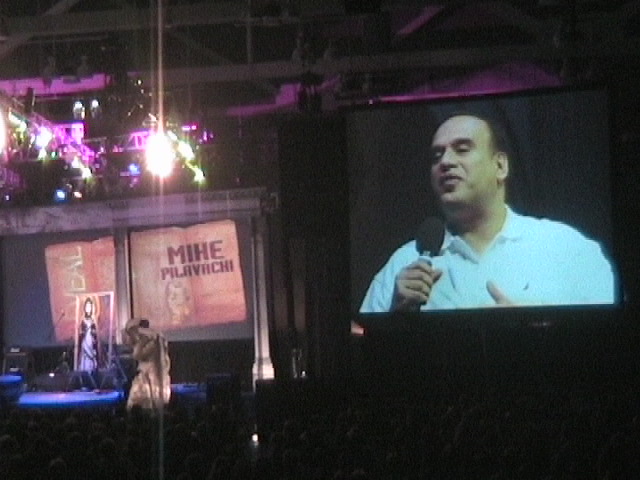
Hearing Mike Pilavichi's quote, "These aren't disciples at all... they're just consumers!" I thought, "I bet that's my fault." Mike goes on, "And then thought, 'who made them that way? I made them that way.'" I about fell out of my chair: "I guessed he was going to say that! And we're both right!"
On the David Crowder Band leading worship: Only Crowder can be Crowder. But in worship, we can all be Crowder-like.
Buster Soaries' quote: "I don't work with teenagers much anymore. People ask why, and I tell them it's because I keep getting older and they always stay the same age." The serious thought this triggered: so all departments need to be such good friends that we can track students, and stay in contact with the ones we connect with, from children's ministry to youth to young adult to campus ministries to their adult lives. How can church departments, and various congregations, become good enough friends to make that happen?
Watching the incredibly varied crowd of youth ministers walking out of sessions: All together, we have the talents, personality and common interests, to connect with every student on earth. How much of a travel budget would I need to bring everyone else to my church to prove it?
Hearing Mike Pilavichi's quote, "These aren't disciples at all... they're just consumers!" I thought, "I bet that's my fault." Mike goes on, "And then thought, 'who made them that way? I made them that way.'" I about fell out of my chair: "I guessed he was going to say that! And we're both right!"
10.06.2006
NYWC Austin: Day 2
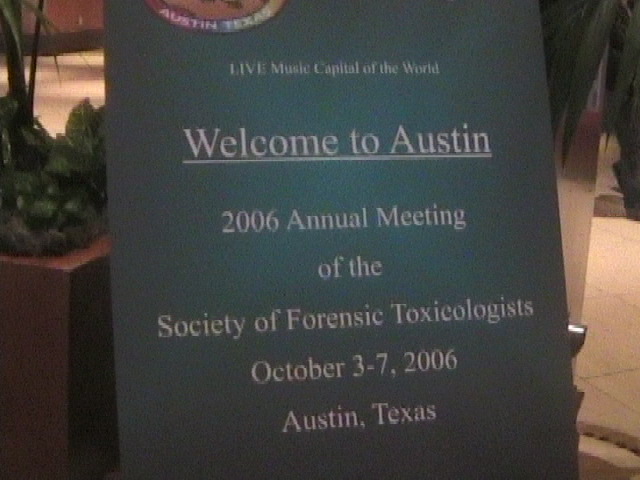
As always, there's a smorgasbord of workshops to take here in Austin, and my stance against human cloning always gets shaken by lists like this, because I want to take them all. So each year I pick a theme, to help me decide and make sure I get as much as possible out of them.
Last year I picked "best practices" and went to a bunch of workshops on administration or staying un-sued. This year, I'm working on learning better speaking and teaching habits. Late Night stuff looks amazing too; theology with Tony Jones, middle school ministry with Kurt Johnston, special concerts and lots of worships throughout the day.
This sign is in the lobby of the Hilton Austin, where Marty and I are staying. When I saw it, I said "Marty, let's go to that conference instead!" But I think we made the right choice in sticking with YS!
Nearly time for first general session!
While You're in Austin...
I hope there are some regular Rookie readers down here in Austin this week, and while you're here, I've found a couple of places that I'll highly recommend.
Moonshine Grill is where I had dinner tonight; it's a fantastic place literally around the corner from the convention center (in fact, you can see the convention center parking structure from there) and there's a waiter named Kyle who's a hoot and also knows the menu inside and out, and can guide the new visitor through it. Our group sampled the calamari, artichoke and spinach fondue, jalapeno hanger steak, chicken almondine, crusted snapper, and barbecued chicken. Moonshine is at 303 Red River St., Austin TX 78701
Amy's Ice Cream isn't far away either, at 1012 W. 6th St., Austin TX 78703. They're famous for handmande ice cream, mix-ins (like Cold Stone, but with a lot more enthusiasm and charm) and the antics of the staff as they make the ice cream. The best trick we saw was the guy behind the counter putting the ice cream cup on the brim of his hat, then flipping a second scoop up into the air and catching it in the cup.
Give them both a try!
Moonshine Grill is where I had dinner tonight; it's a fantastic place literally around the corner from the convention center (in fact, you can see the convention center parking structure from there) and there's a waiter named Kyle who's a hoot and also knows the menu inside and out, and can guide the new visitor through it. Our group sampled the calamari, artichoke and spinach fondue, jalapeno hanger steak, chicken almondine, crusted snapper, and barbecued chicken. Moonshine is at 303 Red River St., Austin TX 78701
Amy's Ice Cream isn't far away either, at 1012 W. 6th St., Austin TX 78703. They're famous for handmande ice cream, mix-ins (like Cold Stone, but with a lot more enthusiasm and charm) and the antics of the staff as they make the ice cream. The best trick we saw was the guy behind the counter putting the ice cream cup on the brim of his hat, then flipping a second scoop up into the air and catching it in the cup.
Give them both a try!
10.05.2006
NYWC Austin: Day 1
My dear friend and colleauge Marty C. and I arrived in Austin, TX about noon today, checked in at the hotel and wandered across the street (Marty to the cabdriver: "How close is the Austin Hilton from the Convention Center?" Cabdriver to Marty: "Close enough you can throw a rock at it.") to register for the convention.
As usual, it's a wonderland. The bookstore alone could take up most of my time, and watching the exhibit hall getting set up makes me truly excited to see how all the booths look and what they're offering. And walking through the halls and across the street and into the elevator and getting the little smile and nod from my fellow youth ministers (the one that says "I love it here too, buddy...") is a gift from God.
I've just come from Day One of the Critical Concerns course on media in ministry ("Digital Discipleship") and my first thought on leaving the room was "I need more stuff... more wonderful stuff."
After thinking about it, I had a much more helpful thought. It was "Yes, I can."
Yes, I can reach deeply into the stacks and piles of media that are out there overwhelming us all every day, and dig out things that will connect with my students, make them laugh, get them talking, send them home on a high note from our program.
Yes, I can reach out to an individual student with a "birthday card" video, or a quick text message before a big test, or podcast the retreat talk for the students who couldn't make it. Yes, I can make the video from the mission trip or the ski weekend or the fall kickoff look good, so they help draw people to our program, where we point them beyond the screen to Christ.
And yes, I can teach those students to work with the media themselves.
More than that, yes we can (as adult leaders) learn these new things.
One of the things that makes events like the NYWC most valuable is the number of times we can sit in a room full of our peers and learn to say "Yes, we can!"
Father God, bless this gathering in Austin. Grant us rest, away from our everyday. Let us put down our sins and our worries for the congregations we serve, knowing You are still there watching over them. Fill us with your light and let us hear your laughter while we are together here. Amen.
As usual, it's a wonderland. The bookstore alone could take up most of my time, and watching the exhibit hall getting set up makes me truly excited to see how all the booths look and what they're offering. And walking through the halls and across the street and into the elevator and getting the little smile and nod from my fellow youth ministers (the one that says "I love it here too, buddy...") is a gift from God.
I've just come from Day One of the Critical Concerns course on media in ministry ("Digital Discipleship") and my first thought on leaving the room was "I need more stuff... more wonderful stuff."
After thinking about it, I had a much more helpful thought. It was "Yes, I can."
Yes, I can reach deeply into the stacks and piles of media that are out there overwhelming us all every day, and dig out things that will connect with my students, make them laugh, get them talking, send them home on a high note from our program.
Yes, I can reach out to an individual student with a "birthday card" video, or a quick text message before a big test, or podcast the retreat talk for the students who couldn't make it. Yes, I can make the video from the mission trip or the ski weekend or the fall kickoff look good, so they help draw people to our program, where we point them beyond the screen to Christ.
And yes, I can teach those students to work with the media themselves.
More than that, yes we can (as adult leaders) learn these new things.
One of the things that makes events like the NYWC most valuable is the number of times we can sit in a room full of our peers and learn to say "Yes, we can!"
Father God, bless this gathering in Austin. Grant us rest, away from our everyday. Let us put down our sins and our worries for the congregations we serve, knowing You are still there watching over them. Fill us with your light and let us hear your laughter while we are together here. Amen.
I'm on the way to Austin, TX, sitting in the Dallas airport (not a terribly inspiring place, about a 6 on my personal 10-point scale of airports) and thinking about the news that's been on screens around me all morning. Allowing enough time to go through airport security and then discovering no one else did the same gave me plenty of time to get caught up on the headlines today.
Most of them were about the recent set of school shootings and their aftermath. They ranged from simple reports on the funeral services for four of the Amish girls, to commentary on school safety in general and a proposal by someone in state legislature who proposed allowing teachers, principals "and even janitors" to carry guns. All of the stories illustrate a problem that, while not unique to youth ministry, tends to pinch ministry staff the most because of our determination to get into schools and meet our students there.
CSMSG's fall parenting seminar features Mark DeVries, who's speaking on "Stacking the Stands for our kids." Paul Hill, in "Frogs Without Legs Can't Hear" and various seminars he does based on that work, offers "AAA adults," (for Available, Authentic and Affirming.) I'm sure at the NYWC conference I'm on the way to, I'll hear at least one other term and method for the same thing. It boils down to "surrounding kids with caring adults." When we do that, they're never (as close to never as we can manage) out of sight of a good example, someone who can be the signpost they need toward the right thing, or the honest struggle to find the right thing.
Which, of course, requires a great deal of trust. Parents need to be able to trust the adults their children see every day, students need to be able to trust their teachers and youth workers, and adults working around youth need to be able to trust each other. Every time something horrific happens, that trust cracks. When three such events happen in a week (and as one reporter commented, there were actually six school-violence-related events, but "some of them just don't make the headlines anymore.") our whole society suffers.
The obvious prediction is that youth ministers, especially new ones, will have a progressively harder time getting themselves into schools, which has rarely been easy to begin with. I'd be upset about this all by itself if it weren't for the farther-reaching consequences of this breakdown in trust.
In general, what students need is to be exposed to a wide range of adults, beginning with parents and parents' friends and expanding to school, work, people in elected office and the whole community. They need to have the practice, while growing up, at learning to work with adults, since no generation ever has the world all to itself.
But in general, what they get, especially in the crackdowns and paranoia that invariably follow tragedies in the schools, is isolation from many adults, to avoid the few predators. Instead of the multigenerational community we dream about, we end up with tribes based on age who band together and glare at each other.
Doing ministry is not going to get any easier until Christ's return. So what do we do in the meantime?
1. Invest heavily in student leaders. Teach them to minister to their classmates, and how to bring trusted adults closer to their peers.
2. Be visible in schools at all public functions-- sports, music, drama, the usual roundup. At these events, spend lots of time with parents. Ask to be introduced to the parents' friends. Meet the coaches, counselors, teachers and administrators (who, by the way, administer, and do not administrate.)
3. Be proactive in knowing the adults we bring into our programs. There's no excuse anymore for not doing background checks, people! EVERYONE-- Church School, youth group volunteers, ministry team leaders, needs to be checked, and to be interviewed in person. Use your gut, and your research. This is to keep the students we love in Christ safe.
4. Realize that parents are our friends-- and act like it. Don't antagonize parents, partner with them. Care about their lives too. Talk to them when they answer the phone when we call for their children. Give them tools to understand their children, since it's their job to begin with.
5. Be there when the bad stuff happens. Duh. And continue the "ministry of presence" when things are going great.
6. Live in prayer for our students and teach them to do the same. God has a plan for this whole mess and we are not to enter any part of it without asking how we fit.
Most of them were about the recent set of school shootings and their aftermath. They ranged from simple reports on the funeral services for four of the Amish girls, to commentary on school safety in general and a proposal by someone in state legislature who proposed allowing teachers, principals "and even janitors" to carry guns. All of the stories illustrate a problem that, while not unique to youth ministry, tends to pinch ministry staff the most because of our determination to get into schools and meet our students there.
CSMSG's fall parenting seminar features Mark DeVries, who's speaking on "Stacking the Stands for our kids." Paul Hill, in "Frogs Without Legs Can't Hear" and various seminars he does based on that work, offers "AAA adults," (for Available, Authentic and Affirming.) I'm sure at the NYWC conference I'm on the way to, I'll hear at least one other term and method for the same thing. It boils down to "surrounding kids with caring adults." When we do that, they're never (as close to never as we can manage) out of sight of a good example, someone who can be the signpost they need toward the right thing, or the honest struggle to find the right thing.
Which, of course, requires a great deal of trust. Parents need to be able to trust the adults their children see every day, students need to be able to trust their teachers and youth workers, and adults working around youth need to be able to trust each other. Every time something horrific happens, that trust cracks. When three such events happen in a week (and as one reporter commented, there were actually six school-violence-related events, but "some of them just don't make the headlines anymore.") our whole society suffers.
The obvious prediction is that youth ministers, especially new ones, will have a progressively harder time getting themselves into schools, which has rarely been easy to begin with. I'd be upset about this all by itself if it weren't for the farther-reaching consequences of this breakdown in trust.
In general, what students need is to be exposed to a wide range of adults, beginning with parents and parents' friends and expanding to school, work, people in elected office and the whole community. They need to have the practice, while growing up, at learning to work with adults, since no generation ever has the world all to itself.
But in general, what they get, especially in the crackdowns and paranoia that invariably follow tragedies in the schools, is isolation from many adults, to avoid the few predators. Instead of the multigenerational community we dream about, we end up with tribes based on age who band together and glare at each other.
Doing ministry is not going to get any easier until Christ's return. So what do we do in the meantime?
1. Invest heavily in student leaders. Teach them to minister to their classmates, and how to bring trusted adults closer to their peers.
2. Be visible in schools at all public functions-- sports, music, drama, the usual roundup. At these events, spend lots of time with parents. Ask to be introduced to the parents' friends. Meet the coaches, counselors, teachers and administrators (who, by the way, administer, and do not administrate.)
3. Be proactive in knowing the adults we bring into our programs. There's no excuse anymore for not doing background checks, people! EVERYONE-- Church School, youth group volunteers, ministry team leaders, needs to be checked, and to be interviewed in person. Use your gut, and your research. This is to keep the students we love in Christ safe.
4. Realize that parents are our friends-- and act like it. Don't antagonize parents, partner with them. Care about their lives too. Talk to them when they answer the phone when we call for their children. Give them tools to understand their children, since it's their job to begin with.
5. Be there when the bad stuff happens. Duh. And continue the "ministry of presence" when things are going great.
6. Live in prayer for our students and teach them to do the same. God has a plan for this whole mess and we are not to enter any part of it without asking how we fit.
10.04.2006
It seemed like *such* a good idea...

"Let's get our teachers more involved with each other, and with the lesson plans," we said early this year, and started plotting how we could use the church website to get our teachers talking and preparing. We're using the lectionary, so this week's lesson is on divorce and what Jesus taught about it.
Today I sent the link out to a couple of folks who are stepping in for this Sunday to help out the regular teachers, and got back an email from one: "Having an ad on the site is no big deal, but it seems passing strange that this particular ad came up on the page for this week's lesson plan on marriage and divorce."
It was this photo. Today the youth minister is embarrassed. The slogan doesn't exactly shriek "COMMITMENT!" does it?
10.03.2006
Concertina for Cellular Phones
Yes, that's right; a piece of music has been written and successfully performed using cellular phones and a symphony orchestra at the same time, according to this article in the New York Times.
Apparently the hardest part is making sure the audience members know how to make their phones ring on cue. The director of the Chicago Sinfonietta says he got the idea in the airport, noticing how many people were talking on cellphones.
“I thought, ‘Darn, if you can’t beat them, join them,’ ” Mr. Freeman said. He approached several composers, including Mr. Baker, 74, who is also director of the Smithsonian Jazz Masterworks Orchestra.
“My first inclination was to ask him what he was smoking,” Mr. Baker said. But the idea appealed to him. He struggled for five weeks on how to reconcile diametrically opposed elements — an orchestra and cellphones — and came up with the idea of having onstage cellphones with his own themes, and a division of phones in the hall.
But the audience participation was key. “It was a way of giving people control at a concert,” he said. “I’m hoping people will see the comedic element, but more importantly, that maybe you can have fun at a symphony concert.” The piece was also a recognition that cellphones “are not going to go away,” he said.
Okay, praise band leaders--it's your turn! How many songs at your next youth worship have a place for cellphones, which you know those guys in the back are using the whole time anyway?
Apparently the hardest part is making sure the audience members know how to make their phones ring on cue. The director of the Chicago Sinfonietta says he got the idea in the airport, noticing how many people were talking on cellphones.
“I thought, ‘Darn, if you can’t beat them, join them,’ ” Mr. Freeman said. He approached several composers, including Mr. Baker, 74, who is also director of the Smithsonian Jazz Masterworks Orchestra.
“My first inclination was to ask him what he was smoking,” Mr. Baker said. But the idea appealed to him. He struggled for five weeks on how to reconcile diametrically opposed elements — an orchestra and cellphones — and came up with the idea of having onstage cellphones with his own themes, and a division of phones in the hall.
But the audience participation was key. “It was a way of giving people control at a concert,” he said. “I’m hoping people will see the comedic element, but more importantly, that maybe you can have fun at a symphony concert.” The piece was also a recognition that cellphones “are not going to go away,” he said.
Okay, praise band leaders--it's your turn! How many songs at your next youth worship have a place for cellphones, which you know those guys in the back are using the whole time anyway?
10.02.2006
Sunday Poll (on Monday, sorry!)
I love it when this happens, but unfortunately it also illustrates a dilemma.
One of the parents who served as a greeter for our students yesterday sent an email this morning that included this thought: "I had to turn down several middle school students who wanted to sign up for a [high school] service project. Can we ask someone to plan an event at the same place that the middle school students can do?"
Here's the question: I tend to set up a calendar so the younger students have some events that they hear about before they're old enough to do them, as a way to build up anticipation for them. But there's also some value in having parallel programming for them so they have the same kinds of experiences as the older students and start building them up as a lifestyle.
When you're working on a calendar, do you program the same kinds of events for both middle and high school students; do you plan one set of events they can do together; or do you have specific events that are just for each age group?
One of the parents who served as a greeter for our students yesterday sent an email this morning that included this thought: "I had to turn down several middle school students who wanted to sign up for a [high school] service project. Can we ask someone to plan an event at the same place that the middle school students can do?"
Here's the question: I tend to set up a calendar so the younger students have some events that they hear about before they're old enough to do them, as a way to build up anticipation for them. But there's also some value in having parallel programming for them so they have the same kinds of experiences as the older students and start building them up as a lifestyle.
When you're working on a calendar, do you program the same kinds of events for both middle and high school students; do you plan one set of events they can do together; or do you have specific events that are just for each age group?
NYWC To-Do List: The Rest
Okay, I've been away from the screen (today's main post covers why) and realized I need to put my NYWC to-do list in one post.
It's almost time for the National Youth Workers' Convention in Austin, TX, hosted by Youth Specialties-- what can I do today to get ready?
Eight Days: Read through the Youth Specialties website and decide which books and resources I must have. Begin pre-writing notes for receipts to explain why each one is vital and why the church's Stewardship campaign this year should support my book habit, rather than the repair of the church roof.
Seven Days: Borrow a ginormous Texas-shaped belt buckle from Andrew M so I can fit it with the locals.
Six Days: Start a pool with the readers of the Rookie Youth Worker to guess which odd instrument the David Crowder Band will be featuring this year.
Five Days: Start an all-jalapeno diet so I can appreciate the rich diversity of Tex-Mex food.
Four Days: Practice the guitar for 13 hours so that even though Group Magazine recently busted the myth of the perfect youth worker (goatee, guitar and God) I can still pretend to be one. There's got to be someone at the convention who still believes!
Three Days: Buy sample sized everything. For two reasons: one, to carry it onto the plane without any hassle, and two, I'll be in a new town where no one knows me-- I can finally see if Axe body spray works the way the commercials (and my middle schoolers) say it does, without worrying the church council.
Two Days: Print new business cards to take with me. Debate whether the title line should read "Shepherd of Souls" or "Deputy Jesus."
One Day: Get no sleep. Give all clothes the sniff test to make sure they're not too gross (hey, just came off a big weekend here; lots of ministry, little laundry). Find chargers for laptop, digital camera, cell phone, Palm Pilot, and electric razor. Put all chargers in a bag and hide them so all the gadgets can die on the second day. I'm not there to work, after all!
FIRST DAY OF NYWC! Get on a plane early in the morning, fly to Austin. Attend Critical Concerns Course to justify spending whole year's education budget, then let the relaxation/networking/sharing of war stories begin!
Thank you, Youth Specialties, for hosting the convention each year! You guys rock!
It's almost time for the National Youth Workers' Convention in Austin, TX, hosted by Youth Specialties-- what can I do today to get ready?
Eight Days: Read through the Youth Specialties website and decide which books and resources I must have. Begin pre-writing notes for receipts to explain why each one is vital and why the church's Stewardship campaign this year should support my book habit, rather than the repair of the church roof.
Seven Days: Borrow a ginormous Texas-shaped belt buckle from Andrew M so I can fit it with the locals.
Six Days: Start a pool with the readers of the Rookie Youth Worker to guess which odd instrument the David Crowder Band will be featuring this year.
Five Days: Start an all-jalapeno diet so I can appreciate the rich diversity of Tex-Mex food.
Four Days: Practice the guitar for 13 hours so that even though Group Magazine recently busted the myth of the perfect youth worker (goatee, guitar and God) I can still pretend to be one. There's got to be someone at the convention who still believes!
Three Days: Buy sample sized everything. For two reasons: one, to carry it onto the plane without any hassle, and two, I'll be in a new town where no one knows me-- I can finally see if Axe body spray works the way the commercials (and my middle schoolers) say it does, without worrying the church council.
Two Days: Print new business cards to take with me. Debate whether the title line should read "Shepherd of Souls" or "Deputy Jesus."
One Day: Get no sleep. Give all clothes the sniff test to make sure they're not too gross (hey, just came off a big weekend here; lots of ministry, little laundry). Find chargers for laptop, digital camera, cell phone, Palm Pilot, and electric razor. Put all chargers in a bag and hide them so all the gadgets can die on the second day. I'm not there to work, after all!
FIRST DAY OF NYWC! Get on a plane early in the morning, fly to Austin. Attend Critical Concerns Course to justify spending whole year's education budget, then let the relaxation/networking/sharing of war stories begin!
Thank you, Youth Specialties, for hosting the convention each year! You guys rock!
9.28.2006
NYWC To-Do List: 7 Days!
Just 7 days to go until the National Youth Workers' Convention in Austin... what can I do today to get ready?
- Borrow a ginormous belt buckle in the shape of Texas from Andrew M, who collects them, so I won't look like a total tourist when I get to Austin.
The Rookie's LIbrary
What I'm Reading:
"Why We Buy" and "The Call of the Mall" by Paco Underhill (describing himself as a "retail anthropologist," Underhill examines motivations for shopping and geography that makes the optimum sales experience possible. As a culture junkie, I'm fascinated and tempted to study anthropology.)
"Cool Comfort" by Marsha E. Ackermann (it's a history of air conditioning and why we love it so much; at the same time, there are a lot of odd and jarring details about the reasons such a system was ever invented-- grab the book!)
What I'm Hearing:
Leonard Cohen, "I'm Your Man" Album
Sanctus Real, "The Face of Love" album
Carbon Leaf, "Love Loss Hope Repeat" album
Scriptures I'm using for talks this weekend:
Acts 8, Philip and the Ethiopian Official ("how will I know unless someone explains it?" for Confirmation class.)
Passages from 2 Samuel (how King David worshipped God in every moment, also using Brother Lawrence's "Practice of the Presence of God")
Best Question from a student:
"How religious will it be?" (talking about the 9th grade lockin)
"Why We Buy" and "The Call of the Mall" by Paco Underhill (describing himself as a "retail anthropologist," Underhill examines motivations for shopping and geography that makes the optimum sales experience possible. As a culture junkie, I'm fascinated and tempted to study anthropology.)
"Cool Comfort" by Marsha E. Ackermann (it's a history of air conditioning and why we love it so much; at the same time, there are a lot of odd and jarring details about the reasons such a system was ever invented-- grab the book!)
What I'm Hearing:
Leonard Cohen, "I'm Your Man" Album
Sanctus Real, "The Face of Love" album
Carbon Leaf, "Love Loss Hope Repeat" album
Scriptures I'm using for talks this weekend:
Acts 8, Philip and the Ethiopian Official ("how will I know unless someone explains it?" for Confirmation class.)
Passages from 2 Samuel (how King David worshipped God in every moment, also using Brother Lawrence's "Practice of the Presence of God")
Best Question from a student:
"How religious will it be?" (talking about the 9th grade lockin)
9.27.2006
NYWC To-Do List
8 days to go until the National Youth Workers' Convention in Austin, TX-- what can I do today to get ready?
- Surf through the Youth Specialties website and check out the books to buy when they're on sale at the convention... pre-write notes for receipts showing how each book is ABSOLUTELY VITAL to our youth ministry and why this year's Stewardship campaign should be focused on letting the youth minister collect the entire YS publishing line, instead of fixing the church roof.
"I can't afford it? I can't afford it? You can't afford me not having this book! Without it our kids are doomed... you hear me? DOOOOOOOOOOOOOOOOOOOOOOOOOOOOOOOOOOOOOOOOOMED!"
Science and Death: One Christian's Response
On this November's ballot here in Missouri, there's an initiative to fund a serious amount of stem cell research. Proponents are focusing on possible cures for scary diseases that we all fear we'll have some day. Opponents are claiming that the measure (Amendment 2) will make Missouri (recently cited as the state with the nation's lowest gas prices-- I spotted 1.99 this morning at my QuikTrip) the new den of Dr. Frankenstein, cloning up a storm. And while people on both sides misunderstand their own terms (for example, when I say cloning, you think of putting Michael Jordan in a machine, pushing a button and out comes another fully grown Michael Jordan, which doesn't happen) there are some serious issues to be considered.
So I was very grateful when CSMSG hosted two speakers to discuss the issue of stem cell research and human cloning; one from the scientific community (Dr. William B. Neaves of the Stowers Institute for Medical Research) and one from the religious/philosophical side (Dr. Robert P. George, of Princeton University and the President's Council on Bioethics.)
Neaves spoke for the amendment and the research. He noted that the most common objection to embryonic stem cell research is that it destroys human embryos, which if left alone become small humans. But this isn't as serious a problem as we all think, Neaves went on, because in normal human reproduction, a much higher number of potential humans, in the form of eggs and sperm cells, die naturally, and a similar number are lost during the many attempts necessary for a successful in vitro fertilization, a process most peolple have grown used to. IVF was Dr. Neaves' analogy through the whole talk, and he frequently reminded us that when it was new, people had equally strong objections to it as they do now to the idea of stem cells.
George approached the issue from the moral and spiritual side, though he said up front that he didn't in fact speak for God or completely know God's will. For some in the audience, since they'd come expecting to hear what God's will was, this was a disappointment, but Dr. George quickly moved into his own territory. Of course eggs and sperm cells die naturally, he told us, but when they're living in their parent bodies, those cells are only parts of the original body, not new entities in themselves. But as soon as the two cells combine in the mother's body, they become a unique, new organism-- an embryonic human person, with complete and unique DNA and a complete and unique life path. And since that new life is not any longer just a part of a parent body, but a life of its own, he deserves the same protection and reverence that we hold for a fully-grown human person.
The largest question we can ask, considering how many enterprises (abortion, war, the clash of religious ideology, event politics) are trying to justify or normalize death on one side to preserve or improve life on the other, is this: Can anything that causes death, no matter of who or what, truly be in accord with God's will?
The Biblical evidence is clear on both sides.
So I was very grateful when CSMSG hosted two speakers to discuss the issue of stem cell research and human cloning; one from the scientific community (Dr. William B. Neaves of the Stowers Institute for Medical Research) and one from the religious/philosophical side (Dr. Robert P. George, of Princeton University and the President's Council on Bioethics.)
Neaves spoke for the amendment and the research. He noted that the most common objection to embryonic stem cell research is that it destroys human embryos, which if left alone become small humans. But this isn't as serious a problem as we all think, Neaves went on, because in normal human reproduction, a much higher number of potential humans, in the form of eggs and sperm cells, die naturally, and a similar number are lost during the many attempts necessary for a successful in vitro fertilization, a process most peolple have grown used to. IVF was Dr. Neaves' analogy through the whole talk, and he frequently reminded us that when it was new, people had equally strong objections to it as they do now to the idea of stem cells.
George approached the issue from the moral and spiritual side, though he said up front that he didn't in fact speak for God or completely know God's will. For some in the audience, since they'd come expecting to hear what God's will was, this was a disappointment, but Dr. George quickly moved into his own territory. Of course eggs and sperm cells die naturally, he told us, but when they're living in their parent bodies, those cells are only parts of the original body, not new entities in themselves. But as soon as the two cells combine in the mother's body, they become a unique, new organism-- an embryonic human person, with complete and unique DNA and a complete and unique life path. And since that new life is not any longer just a part of a parent body, but a life of its own, he deserves the same protection and reverence that we hold for a fully-grown human person.
The largest question we can ask, considering how many enterprises (abortion, war, the clash of religious ideology, event politics) are trying to justify or normalize death on one side to preserve or improve life on the other, is this: Can anything that causes death, no matter of who or what, truly be in accord with God's will?
The Biblical evidence is clear on both sides.
- In the beginning God made living things and called them good. He warned his new creatures "Live life joyfully; just don't do this one thing (sin) that will cause your death. It's clear God wanted His people to live.
- But as the Hebrew people became a nation under God's especial care, they were often told "Go into this land or that land and kill everything there, because those people will kill you and scatter God's people if you don't." In fact, more than one king lost his anointing because he failed to kill enough.
- Jesus told us "I have come that you might have life, and have it more abundantly." On several occasions, Christ and later his disciples raised people from the dead.
- But in order to save our souls, it was necessary that Christ's body die. On the other hand, God also gave Jesus his life back.
In our parish we've had several notable funerals in the last couple of months. Families in our youth program have lost grandparents and parents, and I've been to several of the services, and once again I've noticed that Christians are called to think differently about life and death. We are called to love life of every kind. We are also called to lose it; that's part of our destiny. But that loss for us does not have to be a source of fear or panic, because it is not the end of the story.
Much of the furor stem cell research is causing is because the world is preoccupied with death. If all you have is this one brief lifetime, after all, (as those without Christ believe) you feel powerfully drawn to extend it however that's possible. And since humans are both sinful and selfish, extending my life at the expense of one that may have never really begun (as the proponents of the research will try and convince) doesn't seem that high a price.
Science is part of our system, and a gift from God, but it is not the be-all, end-all. Death is part of our system, and a consequence of our not being able to make perfect choices, but it is not the be-all, end-all either. And I do not fear it, although it makes my heart beat a little faster just to type those words.
For the record, I am opposed to embryonic stem cell research and any other form of scientific life-extending that destroys human lives, however small or undeveloped. Our mission as Christians is much different than the scientific community's, although we can work together on many issues. Our job is to spread the Good News in such a way that the fear of death is unnecessary. Our job is to create a system that respects life from its very beginnings to its eternal end, that relishes every stage of our own lives, and that welcomes rest in Heaven when we have spent the time God gave us in service to our fellow humans. I don't need a day beyond what God has decided to grant to do that.
9.21.2006
What's In a Name?
Our rector walked into my office the other day and called me Justin, as he began to compliment me on the youth kickoff this past Sunday. Now, last time I checked, I'm Isaac, and I know who Justin was-- the youth minister before me. This has happened now and then, mostly with parents, and it scares me every time. Mostly because people who worked with both of us assure me we're completely different.
It made me think about names and how important they are to the people who own them. And how it's a no-brainer to remember people's names. But that made me think of a silly rule I had a while ago. The rule went something like this:
If you see someone and do not know his/her name, there is a limited amount of time/number of encouters when you can ask it before it's rude, because you should know already.
This is an incredibly silly rule. I dreamed it up because I ran into a couple of kids in my previous parish who I'd known from camp, but since I only saw them once a year, didn't always remember their names. Once I moved to Escanaba and found that they lived there too (and thus started to run into them all the time) I was at a serious disadvantage because I didn't know their names, but I'd known the two of them for a long time and didn't feel like I could ask.
Knowing students' names is the very beginning of a connection, and there is never a time when I can't ask, if I've forgotten or momentarily spaced out. There are, of course, many polite ways to ask students their names. "Who are you?" just doesn't quite have that friendly feeling.
When I run into a student whose name I can't recall, I ask "Would you remind me of your name?" That way he or she knows I know it already, or at least have it written down somewhere.
There are fewer solutions for calling students by the wrong names, which I've also done many times. Often, I pick a name for a student I've met (especially friends of my students) and stick it on him or her without checking to see if that's the right one. If a student brings a different friend, that new friend often gets stuck with the old name. I'm willing to live with that one, and laugh at myself when I make the mistake, because if my students are bringing their friends, that outweighs my big, inaccurate mouth.
What do you do when you've forgotten a student's name or call one by the wrong name? Any humorous bloopers out there along these lines?
It made me think about names and how important they are to the people who own them. And how it's a no-brainer to remember people's names. But that made me think of a silly rule I had a while ago. The rule went something like this:
If you see someone and do not know his/her name, there is a limited amount of time/number of encouters when you can ask it before it's rude, because you should know already.
This is an incredibly silly rule. I dreamed it up because I ran into a couple of kids in my previous parish who I'd known from camp, but since I only saw them once a year, didn't always remember their names. Once I moved to Escanaba and found that they lived there too (and thus started to run into them all the time) I was at a serious disadvantage because I didn't know their names, but I'd known the two of them for a long time and didn't feel like I could ask.
Knowing students' names is the very beginning of a connection, and there is never a time when I can't ask, if I've forgotten or momentarily spaced out. There are, of course, many polite ways to ask students their names. "Who are you?" just doesn't quite have that friendly feeling.
When I run into a student whose name I can't recall, I ask "Would you remind me of your name?" That way he or she knows I know it already, or at least have it written down somewhere.
There are fewer solutions for calling students by the wrong names, which I've also done many times. Often, I pick a name for a student I've met (especially friends of my students) and stick it on him or her without checking to see if that's the right one. If a student brings a different friend, that new friend often gets stuck with the old name. I'm willing to live with that one, and laugh at myself when I make the mistake, because if my students are bringing their friends, that outweighs my big, inaccurate mouth.
What do you do when you've forgotten a student's name or call one by the wrong name? Any humorous bloopers out there along these lines?
9.19.2006
"It's just like Christmas, isn't it?"
That's what our clergy secretary said to me when she came down today to find me sorting through sign-up forms from the September kick-off this Sunday.
The kickoff is something Mark DeVries and his merry band at Youth Ministry Architects set us up with, three years ago now. The idea is to get our youth and their parents in the same room, reveal the calendar for the whole year's events, and have people sign up and put down deposits on the things they're interested in, all at once.
We took our first look at the forms today, and so many people signed up to take on volunteer tasks and even leadership roles within our youth ministry family. It truly is just like Christmas. Each folder of event forms is a new gift.
But before I go any farther, a few tips for holding onto those people who so graciously signed up to help.
1. Call them now. Follow up within a few days so they remember what they're on your list for. And so, if some vengeful family member signed them up without asking, they can say so now, and not when you call in a panic looking for one more chaperone for the lock-in.
2. Give them a task right away. Goes along with #1. For example, I had several adult leaders sign up to "follow up with new families." The first thing they're going to be asked is to come to our gatherings on Sunday morning (icebreaker time before Church Schoool classes) and introduce themselves to youth and make sure the students are wearing nametags. It's small, but it goes along with what they signed up for and gives them a connection to the students.
3. Ask "What does this look like to you?" and share your expectations. Lots of good volunteers get lost because of bad communication. You need a clear picture of what the volunteers think they're signed up for, and they need a good, firm idea of what you're asking from them. If they're willing to do more than you're actually giving them, you may be able to offer them more responsibility in the program, for example.
4. Thank them. Thank them now. Thank them when they've taken on a task. Volunteers are treasures in God's hands and worth their weight in gold to your ministry. It's not that we don't want them to be humble, but they need to know they're valuable.
5. Connect them to the other volunteers and ministry staff. This goes for the same reason you have more than one adult working with students; not every adult can connect with every student on the level he/she needs. You, the youth minister, can't always connect just exactly right with every leader. That's okay. It's normal. So you need to be making connections between your leaders so they know they're supported. Also, they'll be more comfortable working in a program that isn't full of strangers. Just this past year we've seen a lot of new people come onto task teams, and our first challenge, before we expect any work to get done, is to introduce them to each other.
6. Walk with them. Encourage new leaders and students to worship, to share prayer requests, to be part of the life of the church. Remember, you're not building a new tribe out of your youth program; you're not separate from the larger Church. You need to be fully into the worship, prayer and service your congregation offers, and your leaders need to be too. Youth ministry by itself is not enough. It needs the context that students grow into it from (children's ministry, nursery, children's chapel) and grow to afterward (college/young adult ministry, vestry/church council, and other ministry leadership that adults take on.)
The kickoff is something Mark DeVries and his merry band at Youth Ministry Architects set us up with, three years ago now. The idea is to get our youth and their parents in the same room, reveal the calendar for the whole year's events, and have people sign up and put down deposits on the things they're interested in, all at once.
We took our first look at the forms today, and so many people signed up to take on volunteer tasks and even leadership roles within our youth ministry family. It truly is just like Christmas. Each folder of event forms is a new gift.
But before I go any farther, a few tips for holding onto those people who so graciously signed up to help.
1. Call them now. Follow up within a few days so they remember what they're on your list for. And so, if some vengeful family member signed them up without asking, they can say so now, and not when you call in a panic looking for one more chaperone for the lock-in.
2. Give them a task right away. Goes along with #1. For example, I had several adult leaders sign up to "follow up with new families." The first thing they're going to be asked is to come to our gatherings on Sunday morning (icebreaker time before Church Schoool classes) and introduce themselves to youth and make sure the students are wearing nametags. It's small, but it goes along with what they signed up for and gives them a connection to the students.
3. Ask "What does this look like to you?" and share your expectations. Lots of good volunteers get lost because of bad communication. You need a clear picture of what the volunteers think they're signed up for, and they need a good, firm idea of what you're asking from them. If they're willing to do more than you're actually giving them, you may be able to offer them more responsibility in the program, for example.
4. Thank them. Thank them now. Thank them when they've taken on a task. Volunteers are treasures in God's hands and worth their weight in gold to your ministry. It's not that we don't want them to be humble, but they need to know they're valuable.
5. Connect them to the other volunteers and ministry staff. This goes for the same reason you have more than one adult working with students; not every adult can connect with every student on the level he/she needs. You, the youth minister, can't always connect just exactly right with every leader. That's okay. It's normal. So you need to be making connections between your leaders so they know they're supported. Also, they'll be more comfortable working in a program that isn't full of strangers. Just this past year we've seen a lot of new people come onto task teams, and our first challenge, before we expect any work to get done, is to introduce them to each other.
6. Walk with them. Encourage new leaders and students to worship, to share prayer requests, to be part of the life of the church. Remember, you're not building a new tribe out of your youth program; you're not separate from the larger Church. You need to be fully into the worship, prayer and service your congregation offers, and your leaders need to be too. Youth ministry by itself is not enough. It needs the context that students grow into it from (children's ministry, nursery, children's chapel) and grow to afterward (college/young adult ministry, vestry/church council, and other ministry leadership that adults take on.)
9.18.2006
Spot the Church Van on Manchester Rd.
Parkway Baptist Church, you were prayed for this morning! God be with you in your ministry today.
9.14.2006
When you give a student a project...
(Posts here at the RYW blog have been a little sparse this week and I apologize for that; CSMSG's fall kickoff is on Sunday and of course at every meeting we remember something else or think of something that would be really cool, so a lot of my time is being spent on getting ready and practicing for Sunday. But that project does lead me to a post about three things I do when I give a student a project...)
1. When I give a student a project, I occasionally bite my nails from stress when it comes in a little closer to the deadline than I like to think I would have done it. But frequently the extra time means the student was more of a perfectionist than me, and wanted it to look just right.
2. When I give a student a project, the idea doesn't come back in exactly the form I'd envisioned. But that student is more in touch with how my kids think, and more aware of what's likely to catch attention, and with fresh eyes can see how to get the message across in its new form.
3. When I give a student a project, I sometimes worry about what the content will look like. Will he know which video clips to pick? What if he uses the ones that are funny to the people in it, but not to the adults in the room? Or an inside joke that only makes sense to the people who went last year? Or manages to pick the one place where the youth minister says something slightly inappropriate? But I gave some guidelines, after all, didn't I; and the reason I chose this particular student is because of what it will mean to him, and the rest of my group, to have this ownership of the project, and how he will shoulder this responsibility, as a precursor to the others his faith will lay on him.
1. When I give a student a project, I occasionally bite my nails from stress when it comes in a little closer to the deadline than I like to think I would have done it. But frequently the extra time means the student was more of a perfectionist than me, and wanted it to look just right.
2. When I give a student a project, the idea doesn't come back in exactly the form I'd envisioned. But that student is more in touch with how my kids think, and more aware of what's likely to catch attention, and with fresh eyes can see how to get the message across in its new form.
3. When I give a student a project, I sometimes worry about what the content will look like. Will he know which video clips to pick? What if he uses the ones that are funny to the people in it, but not to the adults in the room? Or an inside joke that only makes sense to the people who went last year? Or manages to pick the one place where the youth minister says something slightly inappropriate? But I gave some guidelines, after all, didn't I; and the reason I chose this particular student is because of what it will mean to him, and the rest of my group, to have this ownership of the project, and how he will shoulder this responsibility, as a precursor to the others his faith will lay on him.
9.12.2006
Conversation
This Sunday at Skyzone, as we were checking out, I had this short conversation with Jeff, one of the guys who runs the front desk.
Jeff: Can I get you to write down your email address for us? When our church groups come in, we like to get in touch with them and have them write a short testimonial for us, if that's not too much bother.
Me: No problem; testimonials are what we do!
Jeff: Can I get you to write down your email address for us? When our church groups come in, we like to get in touch with them and have them write a short testimonial for us, if that's not too much bother.
Me: No problem; testimonials are what we do!
9.11.2006
Why I Don't Mind...
I've taken a brief break from this blog over the end of last week/this weekend. I had friends in town, for one, and also, CSMSG is in the middle of finishing this year's new curriculum and a lot of it comes down to Isaac finishing all the typing of guides and activities I promised to have for it. In the fall when everything kicks off, it's easy to get swamped, and that's what happened.
In any case, I don't mind that a light, fun, fellowship event was the biggest thing I've led so far here. 63 students came out to SkyZone with us yesterday afternoon-- active kids, friends, and several students who are on our lists but inactive up until yesterday. My dear friend and colleague Marty C had ten RSVPs on Saturday night and we picked up another 12 Sunday morning, and by church time we were both a little stressed trying to make sure we had enough drivers (turned out we did with no problem, thanks parents!) and that SkyZone's trampoline court could handle the whole group of us.
And I don't mind, even though there was no Bible study, no service project, no youth-led worship, because the message we set out with this event was that there are still so many things to do that we can enjoy without having to confess afterward. We didn't come home and say "God, I jumped on a trampoline today, and I know that was a sin, and I ask forgiveness." In fact, it was even good for us-- our bodies were tired, our faces all shiny and red and we were set for calming, restorative sleep to help us start the week.
I think sometimes we talk too much about all the things we can't do. We put ourselves into a mindset of "I can't do anything because I'm a Christian" and because, in truth, a lot of things we are supposed to abstain from are so much in front of us day by day, we forget about the huge number of enjoyable, healthy things we can still try out. Like SkyZone. And 63 students remembered that yesterday.
In any case, I don't mind that a light, fun, fellowship event was the biggest thing I've led so far here. 63 students came out to SkyZone with us yesterday afternoon-- active kids, friends, and several students who are on our lists but inactive up until yesterday. My dear friend and colleague Marty C had ten RSVPs on Saturday night and we picked up another 12 Sunday morning, and by church time we were both a little stressed trying to make sure we had enough drivers (turned out we did with no problem, thanks parents!) and that SkyZone's trampoline court could handle the whole group of us.
And I don't mind, even though there was no Bible study, no service project, no youth-led worship, because the message we set out with this event was that there are still so many things to do that we can enjoy without having to confess afterward. We didn't come home and say "God, I jumped on a trampoline today, and I know that was a sin, and I ask forgiveness." In fact, it was even good for us-- our bodies were tired, our faces all shiny and red and we were set for calming, restorative sleep to help us start the week.
I think sometimes we talk too much about all the things we can't do. We put ourselves into a mindset of "I can't do anything because I'm a Christian" and because, in truth, a lot of things we are supposed to abstain from are so much in front of us day by day, we forget about the huge number of enjoyable, healthy things we can still try out. Like SkyZone. And 63 students remembered that yesterday.
9.07.2006
The Rookie's Library September 7, 2006
What I'm Reading:
"The Man who Ate Everything" by Jeffrey Steingarten (he's the food critic for Vogue and one of the judges on Iron Chef America, and his style reminds me of humor writers like Patrick F. McManus)
"The Practice of the Presence of God" by Brother Lawrence (the monk the book is about practiced experiencing Christ's presence in every part of his daily life, and I want to do that too)
"Why Men Never Remember and Women Never Forget" by Marianne J. Legato (it's an outline of what they're calling "gender-specific medicine" which is a good invention, but it's not a Christian book by any stretch of the imagination; a good read for the biology, but don't apply the morality)
What I'm Watching:
DVDs, looking for scenes with someone making spectacular jumps:
"Indiana Jones and the Last Crusade"
"Shrek2"
"The Goonies"
"The Longest Yard"
(Watching movies at work.. I love my job, I love my job, I love my job...)
What I'm Hearing:
Irish punk bands who aren't really Irish:
Dropkick Murphys--multiple albums
Flogging Molly--multiple albums
A Recipe I'm proud of: Lentil Soup
1 can beef broth
2 cans water
1/2 cup chopped canned spinach
1 tsp. chopped garlic
4 green onions, chopped fine
black pepper
1 cup dry lentils
Put it all in a pot at the same time and simmer for an hour.
"The Man who Ate Everything" by Jeffrey Steingarten (he's the food critic for Vogue and one of the judges on Iron Chef America, and his style reminds me of humor writers like Patrick F. McManus)
"The Practice of the Presence of God" by Brother Lawrence (the monk the book is about practiced experiencing Christ's presence in every part of his daily life, and I want to do that too)
"Why Men Never Remember and Women Never Forget" by Marianne J. Legato (it's an outline of what they're calling "gender-specific medicine" which is a good invention, but it's not a Christian book by any stretch of the imagination; a good read for the biology, but don't apply the morality)
What I'm Watching:
DVDs, looking for scenes with someone making spectacular jumps:
"Indiana Jones and the Last Crusade"
"Shrek2"
"The Goonies"
"The Longest Yard"
(Watching movies at work.. I love my job, I love my job, I love my job...)
What I'm Hearing:
Irish punk bands who aren't really Irish:
Dropkick Murphys--multiple albums
Flogging Molly--multiple albums
A Recipe I'm proud of: Lentil Soup
1 can beef broth
2 cans water
1/2 cup chopped canned spinach
1 tsp. chopped garlic
4 green onions, chopped fine
black pepper
1 cup dry lentils
Put it all in a pot at the same time and simmer for an hour.
9.06.2006
The Latte Song
(sing to the tune of "You are my sunshine" and only in the privacy of your own home or office.)
You are my latte,
My only latte
You keep me moving
When I'm short on sleep
You caffeineate me,
in the morning
Please don't take my latte away!
The other night, dear,
When I lay sleeping,
I dreamt the world ran out of coffee beans
When I awoke with the caffeine shivers,
I went and kissed my Starbucks breakfast blend
You are my latte,
my hazelnut latte.
You make me able
To meet the day
I hope I never
start without you
Please don't take my latte away!
You are my latte,
My only latte
You keep me moving
When I'm short on sleep
You caffeineate me,
in the morning
Please don't take my latte away!
The other night, dear,
When I lay sleeping,
I dreamt the world ran out of coffee beans
When I awoke with the caffeine shivers,
I went and kissed my Starbucks breakfast blend
You are my latte,
my hazelnut latte.
You make me able
To meet the day
I hope I never
start without you
Please don't take my latte away!
9.05.2006
Blindfolded Evangelism
When I came home and opened my mailbox at the end of last week, I found a manila envelope addressed to "Our friends at... [my address]" and nothing else. No return address, no hint of what was inside. They say not to open packages like this, so I waited a couple of days. Actually, I stuck it in my bag and forgot about it until Saturday. When I opened it, I found a book inside called "Ten Commandments Twice Removed" with a handwritten comment on the front cover: "A MUST READ!"
Nothing else. No information on who sent it, no listing of church services I could attend, no suggestion that the sender is praying for me and those prayers prompted the gift.
This was about the single least effective way to evangelize I've ever seen. Not only do I not know who's trying to reach me, I've been given no challenge to connect with any church, or even with Christ!
For all I know, someone noticed this blog, dug around to find my mailing address, and sent me the book in hopes that I would review it.
DON'T DO THIS! Whoever it was, stop anonymously sending fundamentalist Christian books through the mail. Don't blindfold your evangelism! You can build a connection with me-- you have the technology-- it just takes a more personal approach.
Nothing else. No information on who sent it, no listing of church services I could attend, no suggestion that the sender is praying for me and those prayers prompted the gift.
This was about the single least effective way to evangelize I've ever seen. Not only do I not know who's trying to reach me, I've been given no challenge to connect with any church, or even with Christ!
For all I know, someone noticed this blog, dug around to find my mailing address, and sent me the book in hopes that I would review it.
DON'T DO THIS! Whoever it was, stop anonymously sending fundamentalist Christian books through the mail. Don't blindfold your evangelism! You can build a connection with me-- you have the technology-- it just takes a more personal approach.
9.04.2006
Three things we can learn from our Orthodox friends
Yesterday after church at CSMSG and a set of short meetings with students, I headed over to the Orthodox Church of St. Nicholas, a Greek Orthodox church near Forest Park. They were holding their annual "Greekfest" and my goal was some lunch and a tour of the building.
I arrived just in time for the 1:00 tour and and on entering the sanctuary I was left breath- and speech-less. Not an inch of the place was left uncovered by some design, portrait or icon. The tour guide gave a remarkably detailed sketch of the Orthodox church, and the choir sang-- something that only happened on that tour, making me even happier.
Among his comments I found three Orthodox beliefs that especially stuck out for me.
1. The physical world is created good-- God said so. In fact, it was the second thing God said at each stage of creation. (The first was "Let there be," and after it was, "This is good.") Because the world is created good, it pleases God when we use its resources to give glory to God. Churches, homes, cars, gardens, businesses-- these should all be beautiful for that reason, because with intent, our building them can be a form of thanksgiving to God for what He's given us.
2. Jesus began His saving work at his birth, not only at the cross. Jesus progressed through every stage of human life, from birth as an infant to death, and "made over" each stage to redeem every part of life.
3. Icons are an important part of religious practice, not because they are objects of worship (they're not!) but because they help us remember. Icons are faces in the "great cloud of witnesses" (Hebrews 12:1) that's all around us cheering for us in our Christian life. They remind us that we are not alone. They show us that others have suffered as we do, that others have given their lives for the Kingdom. Icons show us people whose lives we can pattern ours after.
I firmly believe that understanding the beliefs of other churches is one of the keys to unity in the church and peace on earth. So (along with the shish kebab, spanakopita and baklava) I'm really glad I went to Greekfest, because I now have a great deal to think about.
I arrived just in time for the 1:00 tour and and on entering the sanctuary I was left breath- and speech-less. Not an inch of the place was left uncovered by some design, portrait or icon. The tour guide gave a remarkably detailed sketch of the Orthodox church, and the choir sang-- something that only happened on that tour, making me even happier.
Among his comments I found three Orthodox beliefs that especially stuck out for me.
1. The physical world is created good-- God said so. In fact, it was the second thing God said at each stage of creation. (The first was "Let there be," and after it was, "This is good.") Because the world is created good, it pleases God when we use its resources to give glory to God. Churches, homes, cars, gardens, businesses-- these should all be beautiful for that reason, because with intent, our building them can be a form of thanksgiving to God for what He's given us.
2. Jesus began His saving work at his birth, not only at the cross. Jesus progressed through every stage of human life, from birth as an infant to death, and "made over" each stage to redeem every part of life.
3. Icons are an important part of religious practice, not because they are objects of worship (they're not!) but because they help us remember. Icons are faces in the "great cloud of witnesses" (Hebrews 12:1) that's all around us cheering for us in our Christian life. They remind us that we are not alone. They show us that others have suffered as we do, that others have given their lives for the Kingdom. Icons show us people whose lives we can pattern ours after.
I firmly believe that understanding the beliefs of other churches is one of the keys to unity in the church and peace on earth. So (along with the shish kebab, spanakopita and baklava) I'm really glad I went to Greekfest, because I now have a great deal to think about.
9.01.2006
Meyers-Briggs Prayer
Backyard Missionary has this post today, the "Meyers-Briggs Prayer." It's hilarious, just what we need on a Friday afternoon right before a long weekend. To quote, my own two profiles:
INFJ: Lord help me not be a perfectionist. (did I spell that correctly?)
ENFJ: God help me to do only what I can and trust you for the rest. Do you mind putting that in writing?
Check it out!
INFJ: Lord help me not be a perfectionist. (did I spell that correctly?)
ENFJ: God help me to do only what I can and trust you for the rest. Do you mind putting that in writing?
Check it out!
Subscribe to:
Posts (Atom)